Welcome back to another week at the Wedding Edit. As we approach the Holiday Season, I thought we should delve into the ever-evolving grazing board since no doubt we will all be enjoying one (or more) during the festivities.
History of Grazing Boards
Modern-day grazing boards evolved from ancient practices of salting, smoking, and curing pork, which grew from a need to preserve the meat at a time when there was no means of refrigeration. The practices of this era were rooted and focused on using all parts of the animal to minimize waste and store them mainly for sailors who were then leaving for months at sea during wartime. In the 15th century, the term “charcuterie” originated with French shops (‘charcutiers’) that specialized in cooked and cured meat products.
In Medieval to 18th-century Europe, the simple meals of working-class people evolved with the addition of a more formal “cheese course” at the end of formal dinners. These elaborate cheese and meat displays were popular in France and Britain but were still presented on boards, referred to as charcuterie. Eventually, the dessert course largely replaced the cheese course, and the presentation style changed to the more formal format of seated dining.
Years later, both the Grazing Board and Charcuterie Board we have today, have evolved to become a customizable edible art piece, where selections are endless. Most interesting from a culinary perspective is that meat selections are no longer limited to the point where a ‘charcuterie board’ is ironically being made absolutely pork-free, contrary to the very term ‘charcuterie’.
The Modern Wedding Grazing Board
Walk into almost any wedding reception, engagement party, or bridal shower in the last five years, and The Board has likely greeted you.
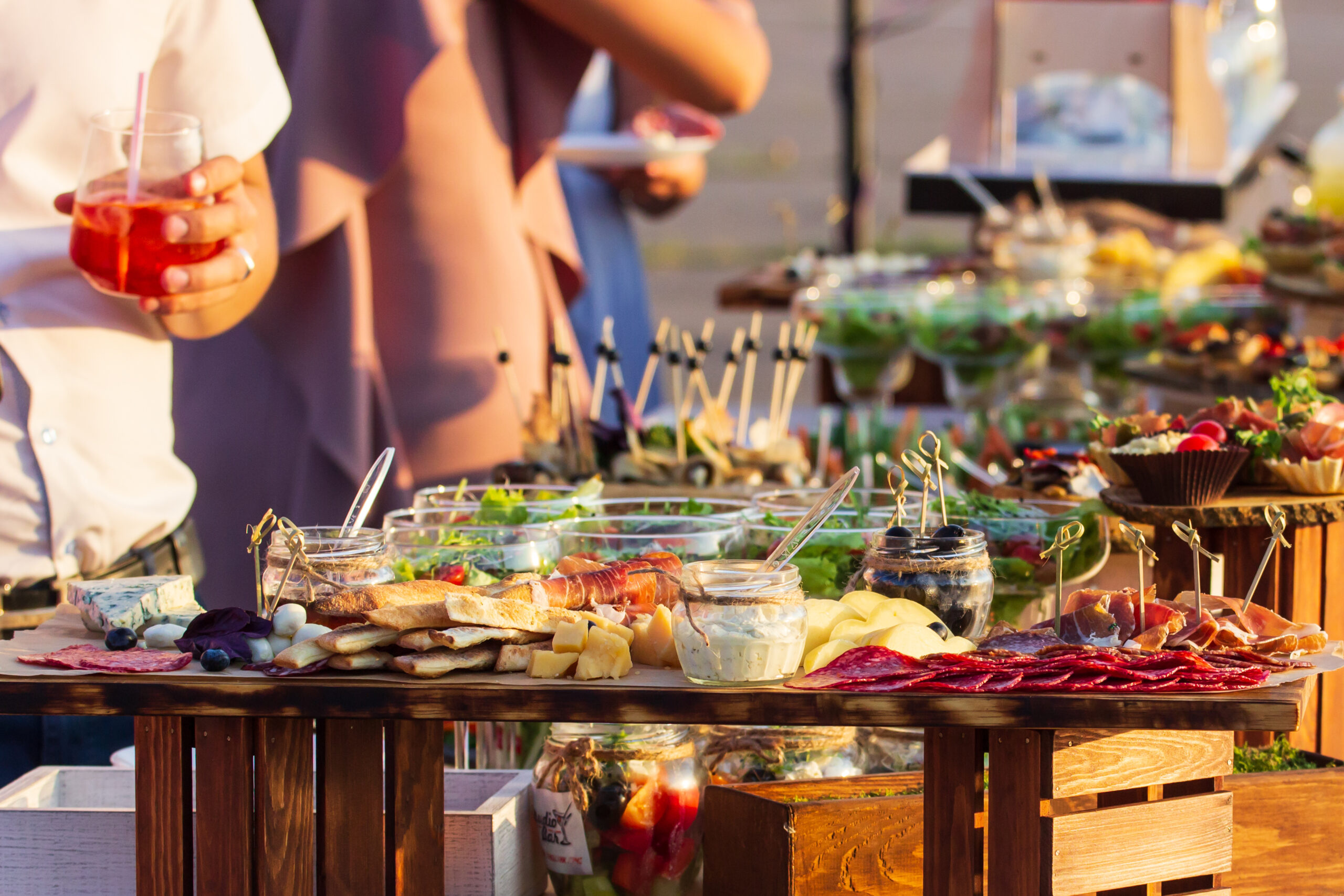
You know the one, the centrepiece. It is essentially “edible art”, a sprawling landscape of artisanal cheeses, cascading ribbons of prosciutto, perfectly rolled salami, rosettes of charcuterie meats and an explosion of figs, grapes, and honeycomb. It is undeniably beautiful. Everyone whips out their phones to capture before the first cracker is lifted.
But as a caterer who has orchestrated food for hundreds of weddings across Ottawa, I have to ask whether grazing boards are actually chic, or whether they are just chaotic?
The answer, as with most things in the wedding industry, lies entirely in the execution.
Today on The Wedding Edit, we are going to slice into the pros and cons of the grazing trend, and how you can ensure your cocktail hour is memorable for the flavor, not the mess.
Why We Love the Graze
Let’s start with the positives, because there is a reason this trend exploded and refuses to die down.
- The Visual Impact There is something deeply primal and satisfying about a table overflowing with food. It signals abundance. It tells your guests, “You will not go hungry here.” From a styling perspective, a grazing table is a textural masterpiece. The contrast of rough-hewn wood, soft brie, vibrant berries, and crunchy nuts adds a layer of decor to the room that a standard passed hors d’oeuvre simply cannot match.
- The Ice Breaker Food is the great equalizer. A grazing station forces movement. Unlike a plated dinner where guests are tethered to their assigned seats, a grazing board encourages mingling. I’ve watched strangers become friends over a mutual struggle to cut a piece of hard Manchego or while debating which jam pairs best with the goat cheese. It creates a communal, casual and lively atmosphere right from the start.
- The “Something for Everyone” Factor Dietary restrictions can be a nightmare for plated meals, but a well-constructed grazing board is democratic. The gluten-free guest can stick to the meats and fruits; the vegetarian has endless cheese options; the keto cousin is thrilled with the charcuterie. It offers autonomy to your guests to eat what they want, as much as they want.
The “Ick” Factor
Now, let’s put on my professional caterer’s hat (and my food safety gloves). Because while the photos look great, the reality of a 6-foot grazing table sitting out for two hours can be… less than glamorous.
- The Temperature Ticking Clock Here is a hard truth: Cheese sweats. Meat oxidizes. Fruit wilts. If your wedding is in a tent in the middle of a humid Ottawa July, that gorgeous display has a shelf life of about 20 minutes before the brie starts looking sad and the grapes get mushy. From a food safety perspective, charcuterie cannot sit out indefinitely. There is a fine line between “room temperature” and “danger zone.” A chaotic board has not been managed for temperature, leaving guests picking at lukewarm meats—a definitive wedding don’t.
- The Hygiene Hurdles We live in a post-2020 world, and our awareness of germs has changed. Watching 150 guests hover over a flat surface, reaching across open food to grab an olive, sleeves dipping near the dip, and the same knife being handled by dozens of unwashed hands? For many guests, this triggers major anxiety. “The Hover Effect.” When guests crowd the table, it creates a bottleneck, and suddenly your chic display looks like a messy free-for-all.
- The Visual Decline A grazing board looks spectacular at 5:00 PM. By 5:45 PM, after 100 people have attacked it? It looks like a battlefield. Crumbled crackers, empty spaces, smeared jelly, and lonely olive pits. Unless it is being actively styled and replenished by staff, the “chic” factor vanishes the moment the first wave of guests descends.
How to Do It Right
So, should you banish the board? Absolutely not. You just need to elevate it. At TastersHUB, we believe in Curated Grazing. This means moving away from the “pile it high” method and moving toward intentional, architectural food design.
Here is how to keep your grazing station Chic, safe, and stunning.
1. Elevation is Everything
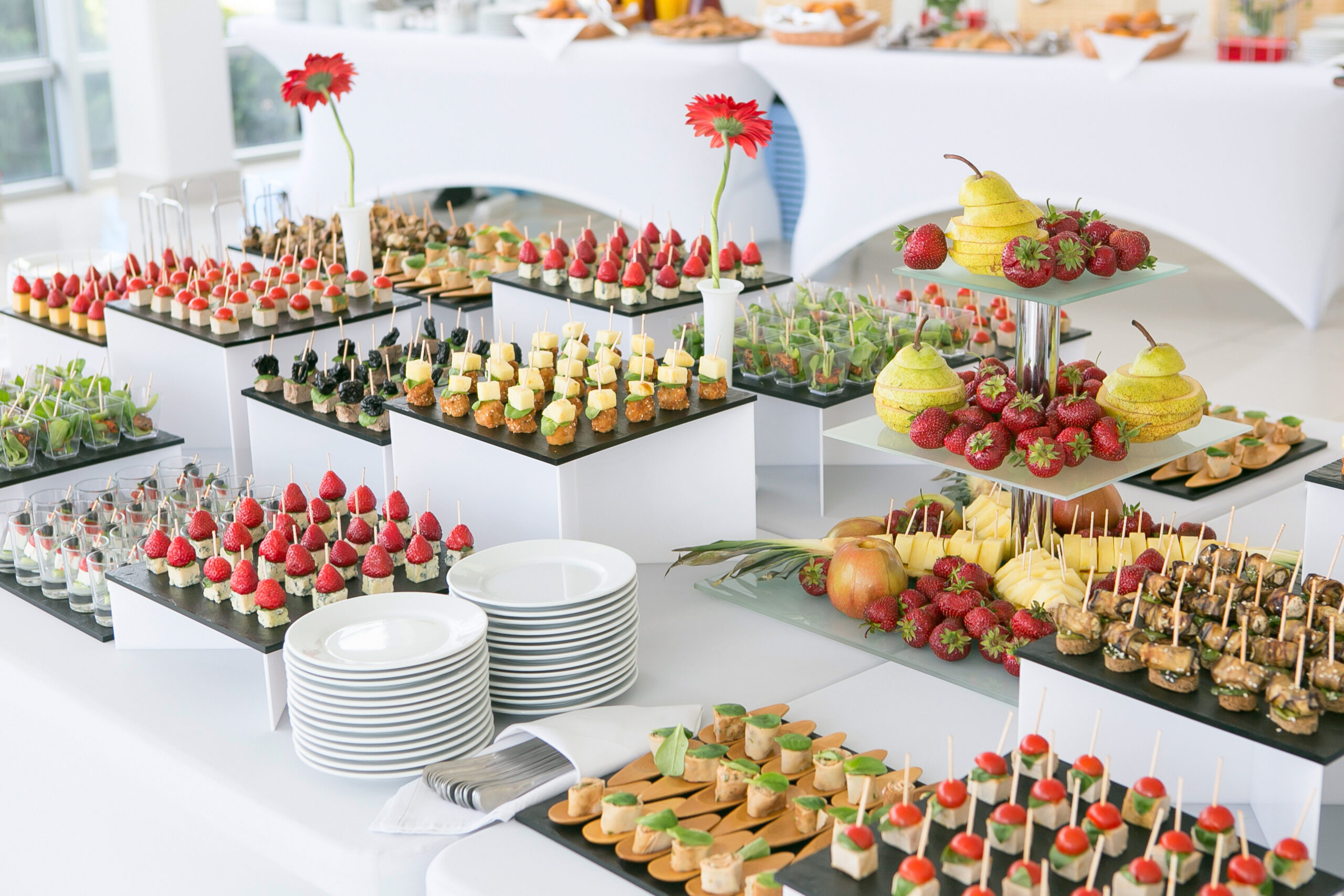
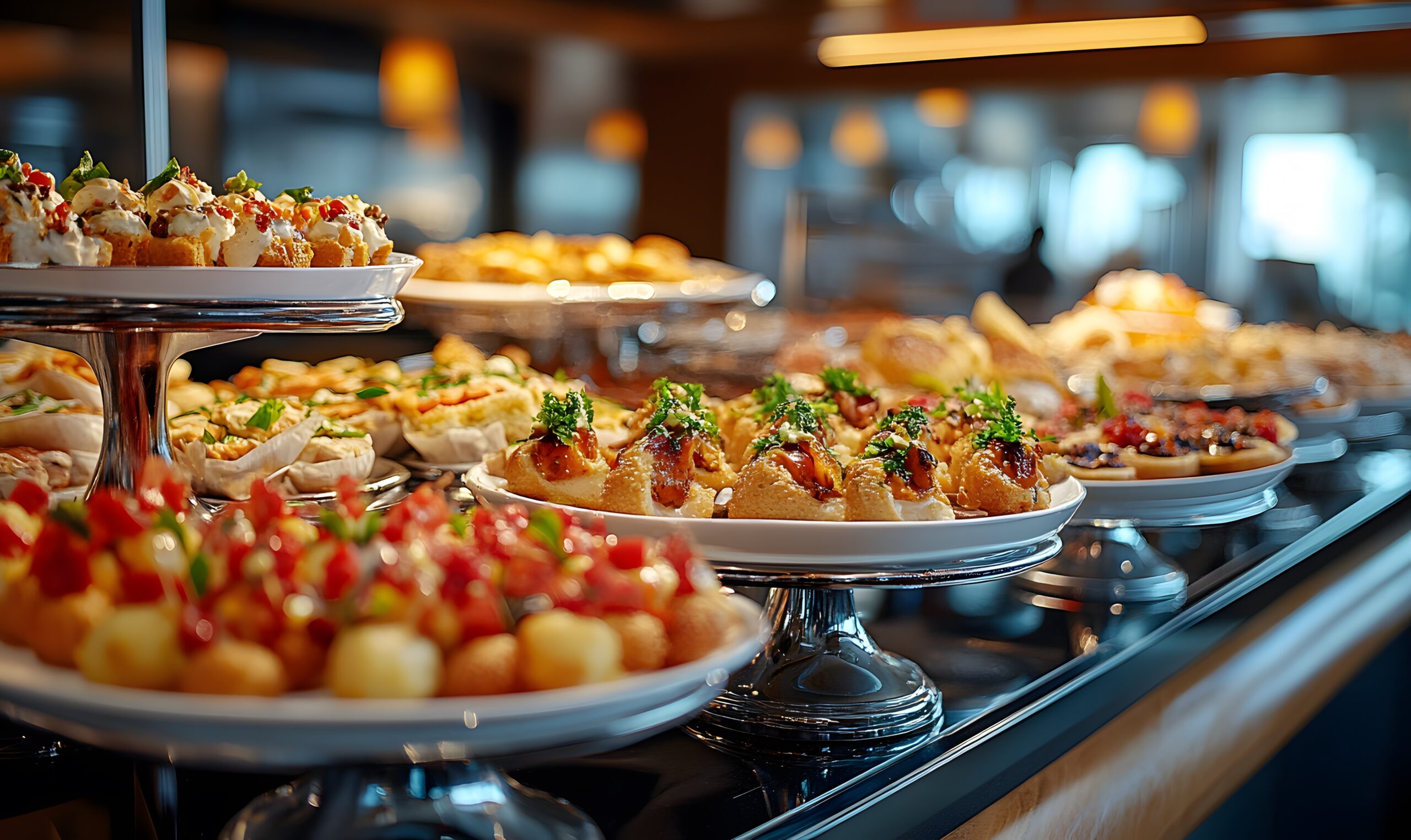
The biggest mistake amateur stylists make is keeping everything flat. A flat board looks messy fast. We use risers, crates, and pedestals to create height. This isn’t just for looks; it separates food groups. By placing the cheeses on a raised platform and the crackers below, you stop guests from reaching over the food. It controls the flow of traffic and keeps sleeves out of the hummus.
2. The Rise of “Jarcuterie” & Individual Portions
If the idea of communal dipping stresses you out, this is the chicest pivot of the year. Individual grazing cups or small bamboo boats. Imagine a mini mason jar containing two skewers of meat, a wedge of artisanal cheese, a breadstick, and a sprig of rosemary. It’s a grab-and-go masterpiece. It eliminates the bottleneck, ensures every guest gets the “perfect bite,” and completely removes the hygiene concern. It’s personalized, safe, and incredibly photogenic.
3. Active Replenishment
You cannot “set it and forget it.” If you want a grazing station, you need a dedicated staff member assigned to it. Their job is to condense the board as food is eaten—moving items closer together so the board always looks full, wiping away crumbs, replacing serving utensils, and swapping out warm cheeses for fresh, cool ones from the fridge.
4. Zoning Your Flavors
Instead of one massive, confusing pile, create “zones.”
- The Sweet Zone: Dark chocolate bark, strawberries, figs, and brie with honey.
- The Savory Zone: Sharp cheddars, spicy salamis, and grainy mustards.
- The Local Zone: (My personal favorite). Feature Ottawa Valley producers. Use local honeycomb, Ontario cheddars, and artisanal crackers from local bakeries. Giving your board a “sense of place” elevates it from a snack to an experience.
The Final Takeaway
A grazing board is a reflection of the wedding itself: it is best when it is beautiful, generous, and well-managed.
If you toss a bunch of food on a table and walk away, you choose Chaos. If you hire a professional to curate the architecture, manage the temperature, and style the flow, you choose Chic.
As you plan your 2026 weddings, don’t be afraid of the Grazing Board. Just respect the logistics. Your guests (and their stomachs) will thank you.
Your Wedding Expert
xoxo Nandini
For TastersHUB Catering & Events
“Love her but leave her wild” Atticus
The secret to a grazing table that doesn’t look messy after 20 minutes? Read my latest for The Wedding Edit on how to keep your cocktail hour food safe, stylish, and stunning. #WeddingEdit #TastersHUB #OttawaEvents #CharcuterieGoals #GrazingBoards