If you are reading this, you are likely deep in the trenches of January planning mode. Outside, the Rideau Canal is (hopefully) frozen solid, and the wind chill is doing that classic Ottawa thing where it hurts your face. But in here? In our minds and on our mood boards? It is lush, vibrant, and bursting with life.
As we settle into 2026, the wedding world is taking a collective deep breath. After the maximalist explosions of 2024 and the “quiet luxury” beige-fest of 2025, this year feels different. It feels… *intentional*.
We are seeing a shift toward floral design that feels less like “decor” and more like an immersive environment. The trends for 2026 aren’t just about specific flowers (though, spoiler alert: Calla lilies are having a major moment); they are about how those flowers make you *feel*.
Whether you are planning a black-tie gala at the Château Laurier or a barefoot celebration in a Wakefield barn, here is your definitive guide to the floral trends taking over the Capital this year.
- The “Cloud Dancer” Effect: Texture Over Colour
Unless you have been living under a rock (or offline, which sounds lovely, actually), you know that Pantone named **”Cloud Dancer”**—a billowy, serene, chalky white—as the Color of the Year for 2026.
For a long time, “all-white weddings” felt a bit dated, a little too 1990s ballroom. But the 2026 interpretation is entirely different. It’s not about pristine, shiny white; it’s about **texture**. Think of it as “sculptural minimalism.” We are seeing florists layer different shades of ivory, cream, and bone to create depth without a single drop of pigment.
**How to do it in Ottawa:**
This trend is absolute magic for winter weddings. Imagine an aisle at the **National Gallery** lined with clouds of baby’s breath, white hydrangea, and bleached ruscus. The key is to avoid “flat” white. You want the fluffiness of cotton, the sleekness of anthuriums, and the delicacy of sweet peas all mixed together. It creates a monochromatic experience that feels modern, not traditional.
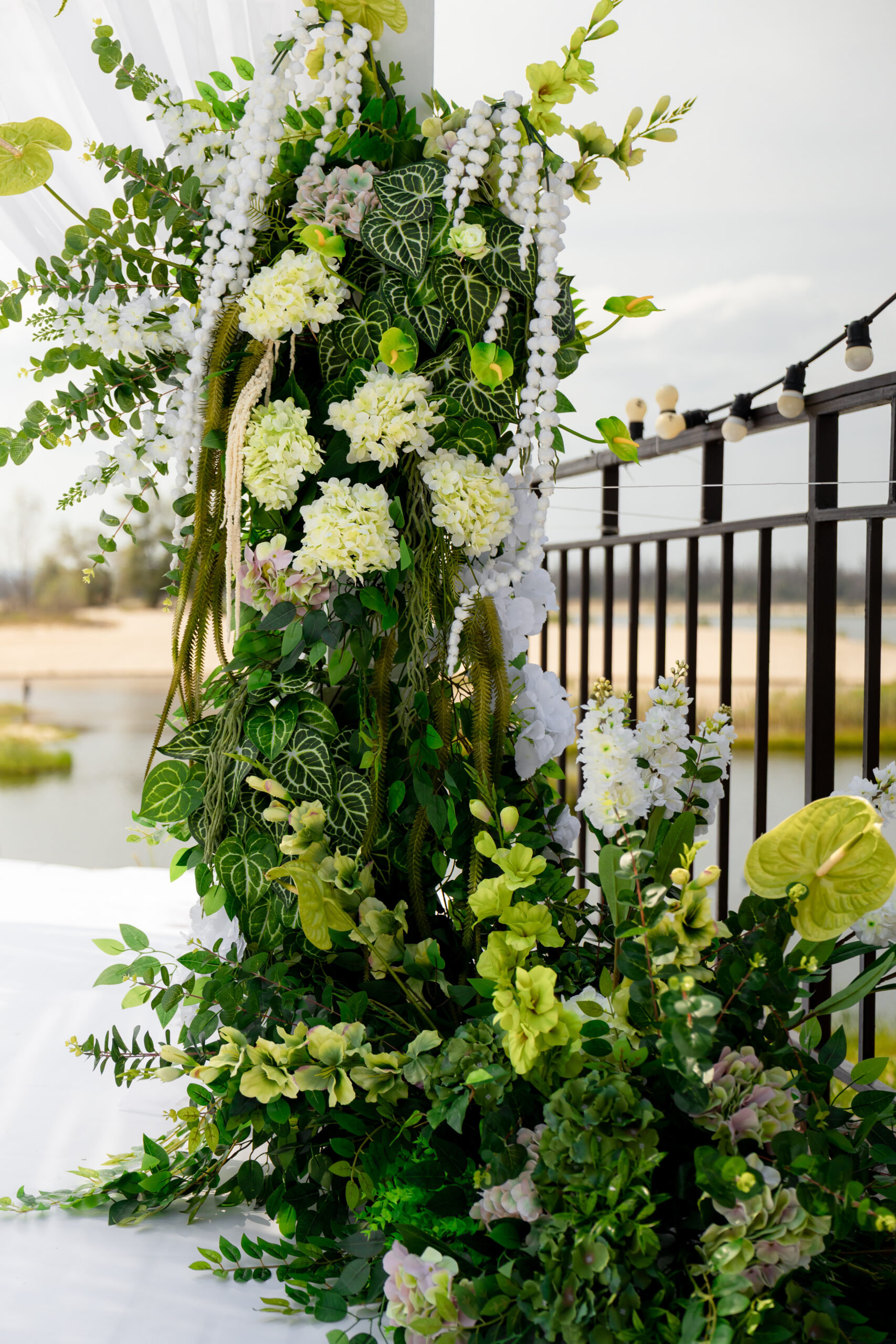 >>>Ask your florist about “reflexed” roses. This is where they manually peel back the petals of white roses to make them look larger and more voluptuous. It adds an architectural quality that fits perfectly with this trend.
- The “Sunken Meadow”
Goodbye, tall trumpet vases. See you later, gold stands that block your view of Aunt Linda across the table. The biggest structural shift we are seeing in 2026 is the **Sunken Meadow**.
Instead of arrangements sitting *on* the table, they are growing *around* it. We are seeing lush, ground-level installations that snake their way down long harvest tables or pool at the feet of the head table. It gives the illusion that nature has reclaimed the space, growing up through the floorboards.
This trend is particularly effective in industrial spaces—think **The Horticulture Building** at Lansdowne. The contrast between concrete floors and wild, sprouting greenery is breathtaking.
>>Why we love it
It facilitates conversation. There is nothing worse than trying to talk to a guest over a massive floral tower. Sunken meadows keep sightlines clear while still enveloping your guests in fragrance and beauty.
- Butter Yellow: The Emotional Anchor
If “Cloud Dancer” is the head of 2026, **Butter Yellow** is the heart.
We are officially moving away from the “Sad Beige” aesthetic. Couples are craving joy, optimism, and warmth. Enter this soft, creamy yellow—the colour of French butter or early morning sunshine. It’s not a jarring, neon yellow; it’s a pastel that acts almost like a neutral.
This shade pairs beautifully with the “Silver Renaissance” we are also seeing (yes, silver is replacing gold hardware this year). The cool tone of silver cutlery against a soft, buttery floral runner is the chicest combo of the year.
>>The blooms to ask for
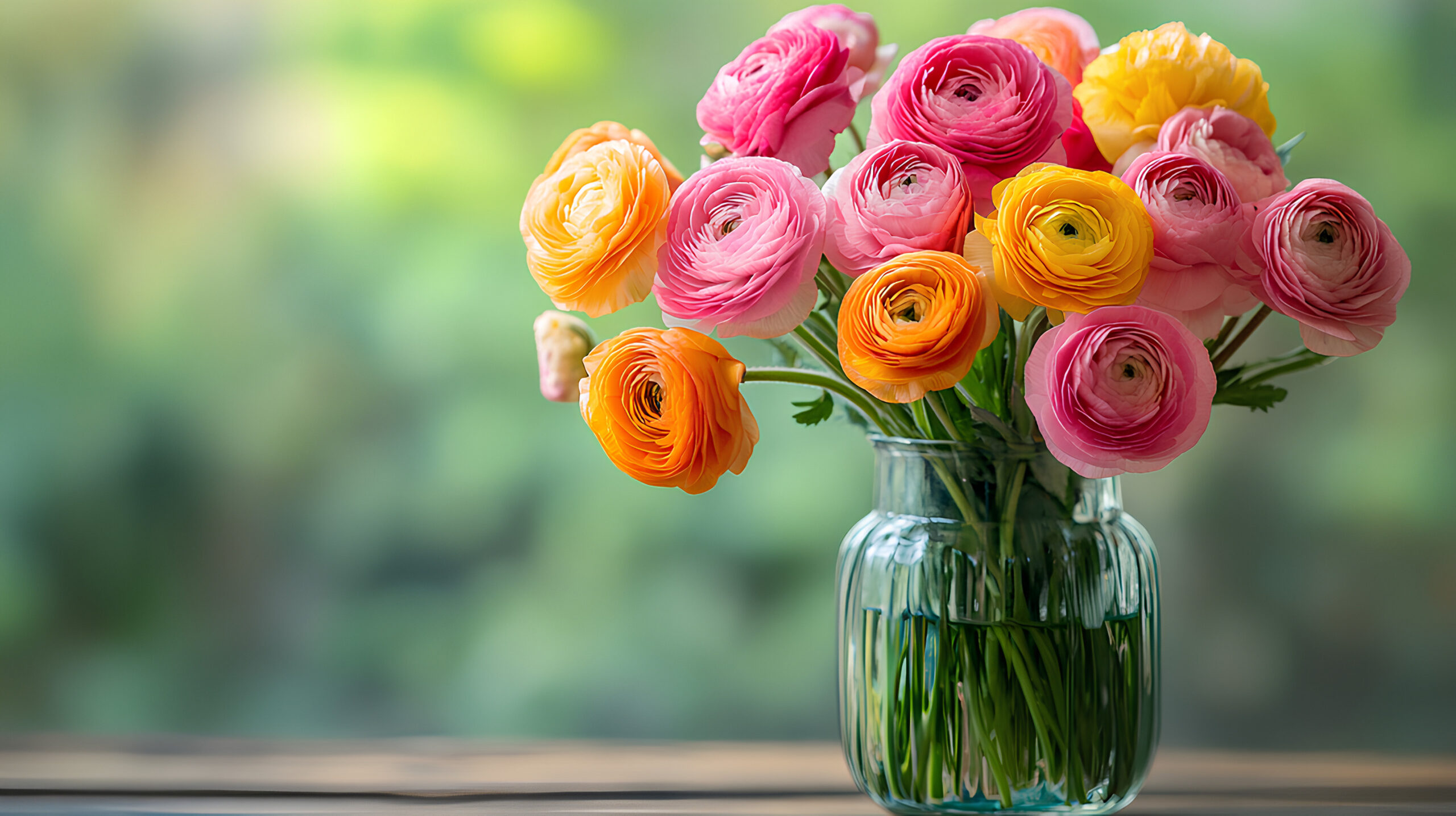
Japanese Butterfly Ranunculus: These have a delicate, fluttering petal structure that looks incredible in pale yellow.
Chamomile Daisies: For that wildflower, “just picked” vibe.
Creamy Sweet Peas: Scent is a huge part of this trend.
- The Vegetable Patch (Yes, Really)
This might sound odd, but stay with me. The “Still Life” aesthetic is huge right now. Inspired by Dutch Masters paintings, we are seeing produce—fruits and vegetables—being integrated into floral arrangements.
This isn’t a bowl of apples sitting next to a vase. This is cut pomegranates, artichokes, clusters of grapes, and even radishes being wired into bouquets and centerpieces. It adds an earthy, tactile element that flowers alone can’t achieve.
For an autumn wedding in the **Ottawa Valley**, this is a no-brainer. Imagine deep burgundy dahlias mixed with dark purple grapes and figs. It feels bountiful, rich, and incredibly romantic. It also signals a move toward sustainability and “farm-to-table” aesthetics that go beyond just the catering.
> **Style Note:** If you go this route, keep the rest of your decor simple. Let the tablescape be the art. Plain linen napkins and simple glassware allow the complex textures of the “produce and petals” to shine.
- The Victorian Revival: Petite & Precious
For years, the trend was “Bigger is Better.” Bouquets were massive, overflowing arm-loads of greenery that often hid the bride’s dress.
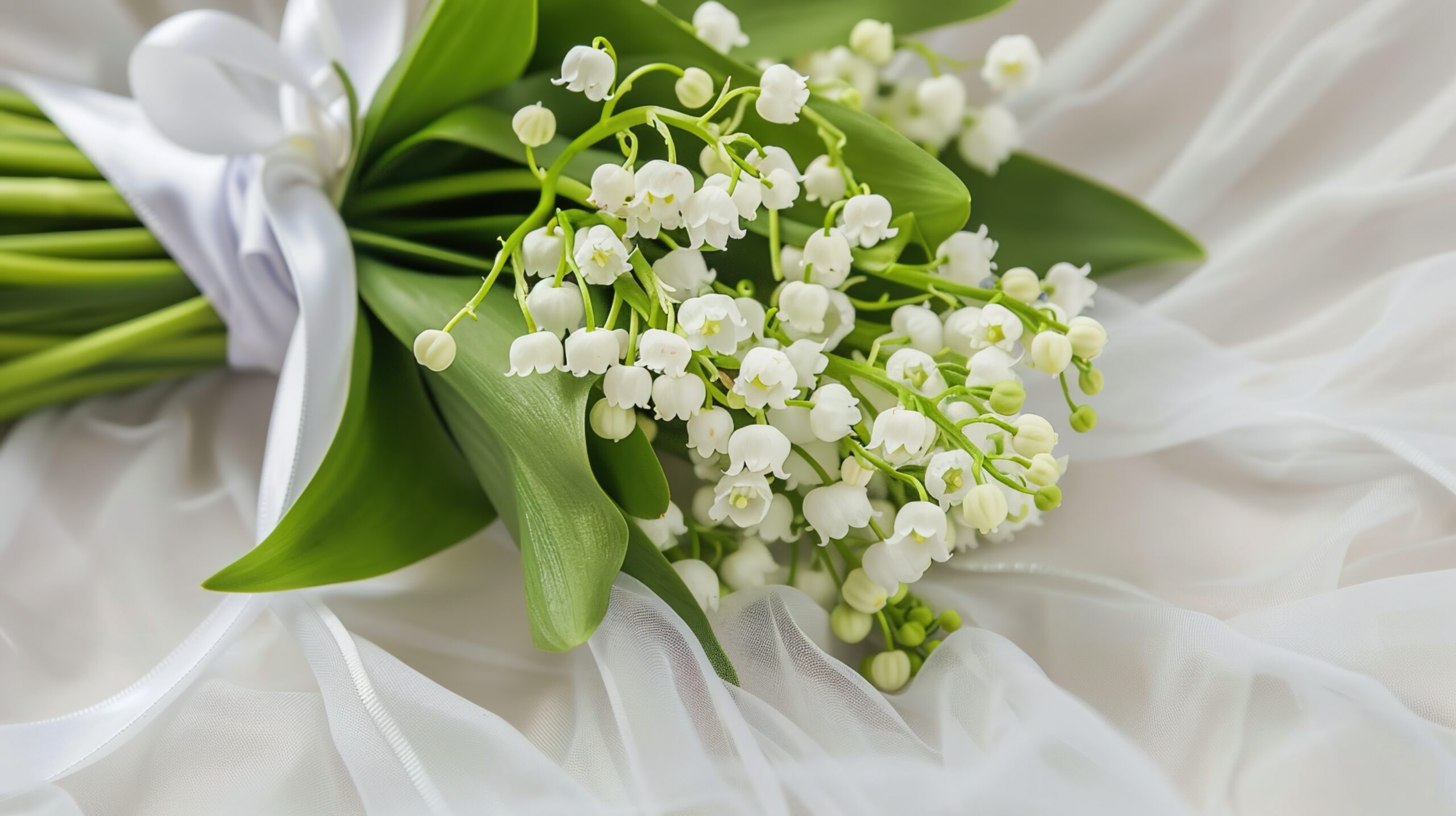
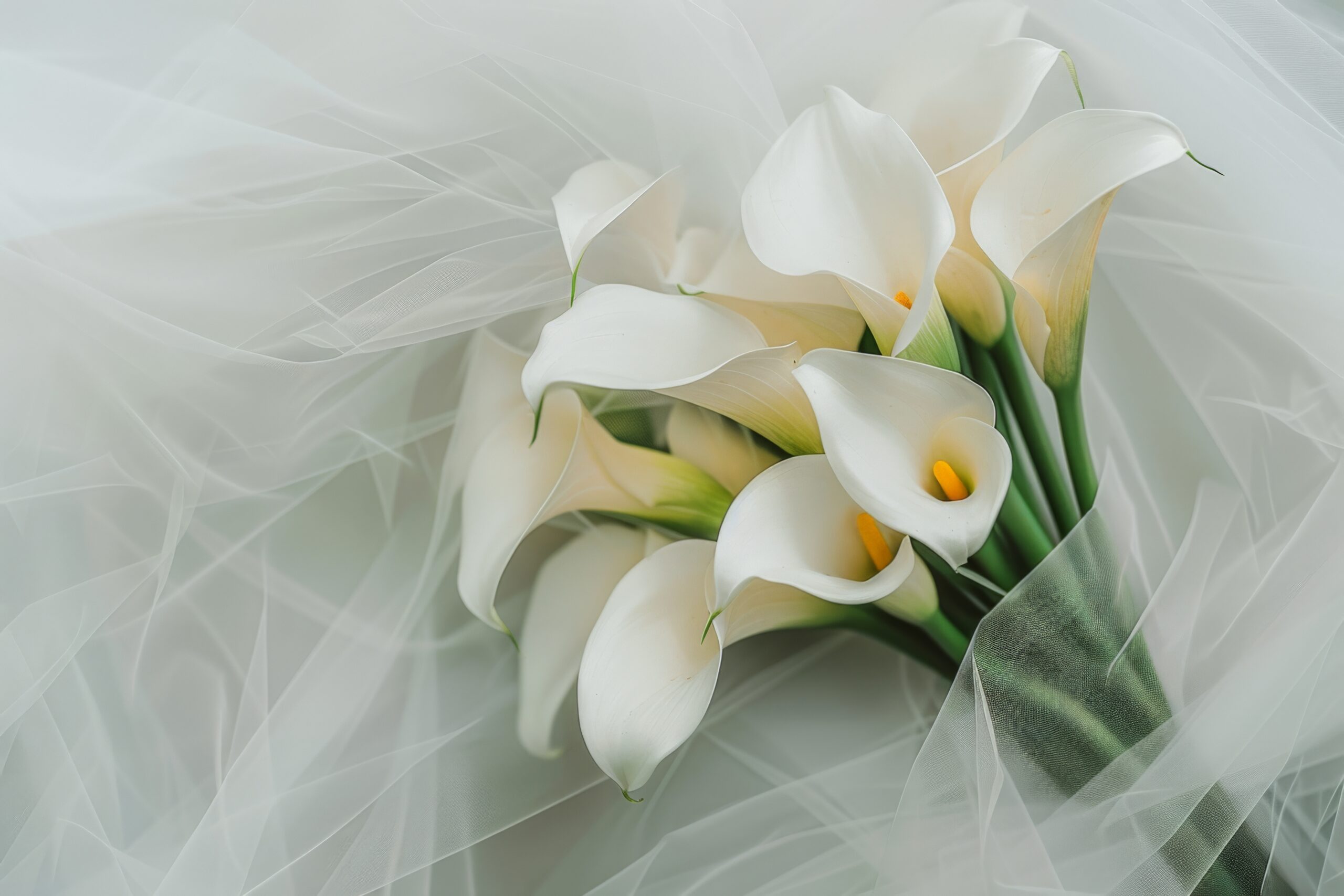
In 2026, the pendulum has swung back. We are seeing a return to the **Petite Bouquet**. Think delicate, intentional posies that can be held in one hand. This is largely driven by the resurgence of two specific flowers: **Lily of the Valley** and **Calla Lilies**.
Lily of the Valley: These tiny, bell-shaped flowers are the epitome of “old money” elegance (Grace Kelly, anyone?). They are expensive and fragile, but carrying a small bundle of them feels incredibly luxurious.
Calla Lilies: The long-stemmed, architectural Calla is back. We are seeing brides carry just three or five long stems, resting in the crook of their arm like a pageant presentation. It’s sleek, modern, and very 1990s-chic.
 Local Florist Insight
I chatted with a few local growers, and they love this trend because it highlights the quality of the individual bloom. When you only have five stems, each one has to be perfect.
A Note on Sustainability
It is 2026, so this almost goes without saying, but **foam-free mechanics** are now the industry standard. The green floral foam of the past is a microplastic nightmare. The best Ottawa florists are using chicken wire, moss, and pin frogs (kenzan) to create these structures.
When you are interviewing florists this month, ask them about their mechanics. A florist who is skilled in foam-free design is a florist who cares about their craft and the environment.
The Bottom Line
Your wedding flowers should not look like a template. Whether you choose the serene “Cloud Dancer” monochrome or the playful “Butter Yellow,” make sure it feels like *you*.
Your Wedding Expert
xoxo Nandini for TastersHUB Catering & Events
“You should be kissed—and often—and by someone who knows how.” —Gone with the Wind