On the Blog This Week: The Olive Oil Masterclass
When it comes to elevating a meal from simple sustenance to a true sensory experience, few ingredients possess the transformative power of a magnificent extra virgin olive oil. Long revered across the Mediterranean as “liquid gold,” exceptional olive oil is far more than a basic cooking fat—it is a complex, living ingredient bursting with character, historical heritage, and a dazzling spectrum of chemical compounds that determine its taste, texture, and longevity on the palate.
For the modern culinary host, understanding the technical structure of fine oil is the first step toward masterfully showcasing it at your table. Whether you are hosting an intimate, multi-course dinner party or designing an experiential tasting for an upscale wedding celebration, a deeper education in this ancient fluid sets an unforgettable, sophisticated tone.
Welcome to Part 1 of our special two-part series. Today, we decode the underlying chemistry and label-quality markers of pure extra-virgin olive oil, and master the technical kitchen science behind creating the perfect fluid emulsion.
Decoding the Label: The Quality Markers of a Finer Oil
Walk down a standard grocery store aisle, and you will find shelves flooded with pristine bottles proudly labelled “Extra Virgin.” Unfortunately, much of the commercial market is dominated by mass-produced, industrial blends that have sat in clear glass bottles under harsh fluorescent lights for months, causing rapid degradation. To source a truly exceptional oil, you must look past basic marketing buzzwords and inspect the bottle for specific, concrete chemical and geographical markers:
1. The Monocultivar vs. The Blend
A masterfully produced oil proudly states the exact olive variety used. Just as a sommelier distinguishes between a bold Cabernet Sauvignon and a delicate Pinot Noir, an olive oil enthusiast looks for specific cultivars that carry distinct, unadulterated flavour profiles.
When an oil is labelled as a “Monocultivar,” it means 100% of the liquid was pressed from a single olive variety, showcasing the pure terroir of that specific crop. Look for these world-class single cultivars:
- Koroneiki (Greece): Robust, intensely green, and incredibly high in natural polyphenols (antioxidants), offering a sharp, peppery throat finish and notes of fresh grass.
- Picual (Spain): Bold, complex, and wonderfully pungent, featuring distinct aromatic notes of tomato leaf, fig, and green apple.
- Arbequina (Spain/California): Soft, buttery, fruity, and highly approachable with an exceptionally mild, smooth finish that makes it ideal for delicate palates.
- Coratina (Italy): A fierce, structure-forward oil from Puglia that delivers an assertive herbaceous punch, intense bitterness, and a powerful peppery kick.
2. The Single Estate & Regional Terroir
Mass-market oils often feature fine print on the back indicating a blend of oils from multiple countries (e.g., “Product of Italy, Spain, Tunisia, and Greece”). These are industrial commodities mixed to maintain a completely uniform, bland taste profile. True luxury oils are estate-bottled or strictly hyper-local. Look for labels specifying a single country of origin, a specific regional micro-climate (such as the Peloponnese in Greece or Jaén in Spain), or an individual family estate.
3. The Harvest & Crush Window
Unlike fine wine, olive oil does not improve with age. It is a perishable fresh fruit juice that is at its absolute peak of flavor complexity and health density the moment it is pressed. Premium oils will always print the exact harvest date (often down to the month and hemisphere) on the bottle. Because harvest cycles differ—the Northern Hemisphere crushes in the fall, while the Southern Hemisphere crushes in the spring—paying attention to this timeline ensures you are purchasing liquid at its highest vitality. For the ultimate tasting experience, aim to consume oils within 12 to 18 months of their crush date.
4. Dark Opaque Glass or Tin Packaging
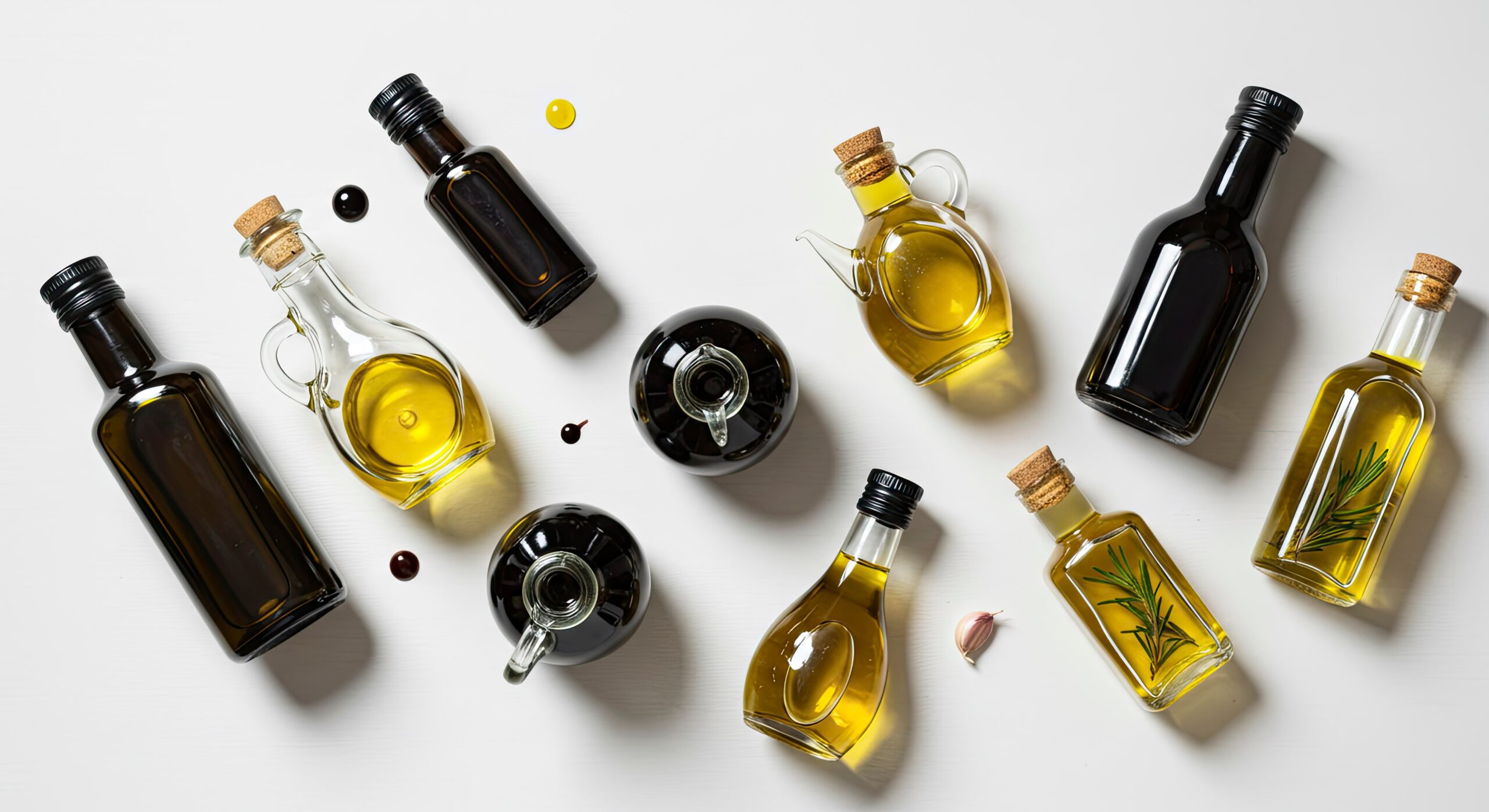
Light, heat, and oxygen are the ultimate chemical enemies of high-quality oil, causing rapid oxidation, flat flavor profiles, and eventual rancidity. High-end oils are never sold in clear plastic or clear glass bottles. They are always housed in dark, heavy amber or green opaque glass bottles, or specialized tin canisters, to protect the delicate liquid inside from light exposure.
The Science of the Emulsion: Shaking Up the Table
Once you understand pure oil, you can unlock its most transformative structural use in the kitchen: emulsification. An emulsion is the magnificent chemical union of two ingredients that naturally repel each other—oil and water-based acids.
At a molecular level, water molecules are polar, meaning they share their electrical charges unevenly. Fat molecules, on the other hand, are non-polar, sharing their charges completely evenly. Because of this structural difference, they cannot form natural bonds. If you shake oil and vinegar together in a jar, you create a temporary suspension. Within minutes, the microscopic oil droplets find each other, fuse back together, and float to the top in a completely separate layer.
To turn a temporary suspension into a stable, velvety sauce that stays bound together over time, you need two elements: mechanical force and an emulsifier.
The emulsifier is the ultimate peacekeeper of the molecular world. It is a specialized surfactant molecule containing two distinct ends: a hydrophilic (water-loving) head and a hydrophobic (oil-loving) tail. When whisked vigorously into a mixture of oil and acid, the water-loving head grabs onto the vinegar, while the oil-loving tail anchors securely into the oil droplets. This forms a protective microscopic bridge, surrounding the tiny oil droplets and keeping them suspended evenly throughout the liquid so the sauce never splits.
The Universal Vinaigrette Blueprint: The 9-3-1 Ratio
Every masterfully balanced, emulsified dressing follows a strict structural blueprint. To ensure your vinaigrettes are perfectly balanced—never too oily, never too acidic—memorize the 9-3-1 Ratio:
- 9 Parts Premium Olive Oil: The rich, textural base. For emulsified dressings, choose a delicate to medium oil so its bitter notes don’t become overwhelmingly sharp when whipped.
- 3 Parts Acid: Your bright contrasting note—think high-quality balsamic vinegar, white wine vinegar, or fresh citrus juice.
- 1 Part Emulsifier: The structural binder that bridges the two together.
Choosing Your Emulsifier
- Dijon Mustard: The absolute gold standard. Mustard seeds contain a natural plant-based glue called mucilage, which surrounds oil droplets with incredible holding power while adding a sophisticated, peppery warmth.
- Raw Garlic Paste: Micro-grated or pounded garlic releases natural starches and sulfur compounds that function as an excellent structural stabilizer.
- Egg Yolk: For permanent, thick emulsions like mayonnaise or authentic Mediterranean aioli. Egg yolks contain lecithin, an incredibly strong phospholipid emulsifier that can bind massive amounts of oil into a dense, luxurious cream.
The Perfect Emulsification Method
To guarantee your vinaigrette never splits, the order of operations is completely non-negotiable. Follow this precise culinary workflow:
1.Build the Acidic Base:Step 1.
In a clean, wide ceramic bowl, combine your 3 parts acid, 1 part emulsifier (like Dijon), and a heavy pinch of kosher salt and cracked black pepper.
2.Whisk to Dissolve:Step 2.
Whisk this mixture vigorously for 30 seconds until the emulsifier is completely dissolved into the acid, creating a uniform, fragrant liquid base.
3.Stream the Oil Micro-Slowly:Step 3.
While whisking continuously and rapidly with one hand, begin pouring your 9 parts premium olive oil with the other hand in a paper-thin, steady stream. Adding the oil drop-by-drop gives the emulsifier time to coat each droplet as it enters.
4.Whisk to a High-Gloss:Step 4.
Once all the oil is incorporated, continue whisking for an additional 20 seconds. The mixture should shift from clear to completely opaque, thickening into a creamy, luxurious coat that beautifully clings to the back of a spoon.
The Sommelier’s Secret: When tasting a fine, robust olive oil raw, you may experience a tickle or a sharp cough at the back of your throat. Do not panic—this is the definitive signature of a world-class oil. That peppery kick is caused by oleocanthal, a powerful anti-inflammatory antioxidant found only in high-quality, freshly crushed olives.
In next week’s column for The Wedding Edit, we shift our focus from chemical theory to artistic table execution. We will explore the magnificent world of flavor-fused oils, establish an artisan bread-pairing matrix, and reveal the premier independent dispensaries in Ottawa where you can sample these liquid treasures in person.
As you navigate the path toward your celebration, remember to enjoy every detail. Happy Planning!
Your Wedding Expert
xoxo Nindi for TastersHUB Catering & Events
“To love is to recognize oneself in another” Eckhart Tolle