This week, as many caterers and planners begin to close off the summer season, lets have a frank conversation about wedding budgets. There is a distinct, often heart-palpitating moment during the planning process when the catering proposals arrive, and suddenly, the sheer economics of feeding a hundred or more of your closest friends and family becomes startlingly real. In an era when food prices are steadily rising, the traditional model of luxury catering—which has historically relied on a massive “just in case” surplus of ingredients that ultimately ends up in a landfill—is no longer just environmentally irresponsible. It is financially disastrous.
Enter the zero-waste catering movement. Often misunderstood as a restrictive, crunchy eco-mandate, zero-waste planning is actually the most sophisticated, razor-sharp financial strategy available to modern couples. Mastering a zero-waste menu is not about serving your guests less; it is about ensuring that every single dollar you spend on premium ingredients works tirelessly for your event. When executed correctly by specialized offsite caterers who understand the nuances of outdoor and estate logistics, zero-waste principles transform potential food waste directly into retained financial margin, all while elevating the guest experience.
The Myth of the “Just in Case” Surplus
The biggest threat to any wedding budget is fear—specifically, the fear of running out of food. This anxiety traditionally pushes couples toward sprawling, overflowing buffets. While a buffet might feel culturally synonymous with abundance, it is a mathematical black hole for your budget. To ensure the last guest in line has the exact same visual experience as the first, caterers must massively over-produce. You are effectively paying a premium for chafing dishes full of food that are destined for the dumpster the moment the reception ends.
The shift to a meticulously planned, plated dinner is a key cost-saving step. Using precise RSVP data to tailor portions and dietary needs allows the culinary team to procure only what is necessary. Imagine a gallery-style plated course featuring delicate, woven vermicelli nests cradling butter-poached lobster or vibrant heirloom vegetable platters. These luxurious presentations feel opulent but are designed to minimize waste, eliminating the typical 15% to 20% surplus associated with buffets. This approach ensures you pay for culinary artistry, not discarded excess, while maintaining a high-end aesthetic.
The Multitasking Menu: Cross-Utilization as a Financial Strategy
The true financial genius of zero-waste catering lies in the classical kitchen technique of cross-utilization. When you hire a culinary team with rigorous, formal training, they do not see vegetable trimmings or leftover artisan breads as trash; they see them as fully paid-for inventory waiting to be transformed.If you are paying top dollar for premium cuts of beef for the main dinner service, a zero-waste kitchen ensures the flavorful trimmings are meticulously saved, ground, and transformed into highly elevated, gourmet sliders for the late-night passing trays. The bones from the feast are roasted down to create the rich, complex demi-glace that finishes the dish. If your menu features bright, beautiful heirloom carrots, the vibrant green tops do not go in the compost; they are blended into a vibrant, herbaceous chimichurri to serve alongside the evening’s appetizers. This means your initial grocery order is quietly subsidizing your cocktail hour and your late-night snacks, entirely insulating your budget from secondary purchasing.
The Midnight Metamorphosis
Late-night food is no longer a fun bonus at weddings; it is an absolute expectation. However, funding an entirely separate menu for the midnight hour can quickly break the bank. A zero-waste approach seamlessly intercepts ingredients that were already displayed or partially utilized during the main reception and reinvents them.
The environmental benefits of zero-waste planning are undeniably profound, but it also offers couples peace of mind by providing clear cost control in a rising market. In an era of steadily increasing food and floral prices, traditional luxury event models—where surplus is expected and discarded—can cause anxiety. Zero-waste strategies help couples feel confident that their budget is managed wisely, making luxury more accessible and less stressful.
Reframing zero-waste planning reveals it not as a restrictive eco-mandate, but as the ultimate strategy for maximizing your event budget. We call this new approach “Smart Splendour.” It is about ensuring every dollar spent on premium, high-quality ingredients works twice as hard for your reception, allowing you to maintain a breathtaking, highly tactile atmosphere without the anxiety of inflated costs. By blending the artistic vision of decor with the culinary execution of the feast, couples are discovering that true luxury lies in intention, not excess.
The Economics of Edible Architecture
The secret to protecting a luxury catering budget lies in fundamentally rethinking the architecture of the dining room. When you adopt an “edible still-life” approach, you are effectively consolidating two major line items: the floral design budget and the late-night catering budget.
For decades, the standard practice was to pay a premium to import out-of-season, delicate blooms that would inevitably wilt by midnight, while simultaneously paying a catering team to supply a completely separate, heavily funded menu for late-night snacks. By utilizing fresh, robust food as the primary visual anchor of your tablescape, you are investing in a single premium ingredient that fulfills both roles beautifully.
Imagine entering a clear-span tent for an evening estate wedding. The tables are draped in heavy, moody tones—think rich Charcoal velvet or Deep Emerald linens. Instead of obstructive floral towers blocking the eyeline, the serpentine tables are lined with lush, continuous runners of vibrant, whole produce. The bright yellows of fresh citrus, the deep, jewel-toned purples of eggplants, and the vivid, striking reds of vine-ripened tomatoes command attention. This gallery-style aesthetic provides an immersive sensory experience, perfuming the air with fresh rosemary and zesty citrus, while deeply insulating your overall budget from unnecessary inflation.
The Midnight Metamorphosis: From Table to Tasting
The true brilliance of dual-purpose design reveals itself after the formal dinner concludes. As guests transition to the dance floor, the culinary team orchestrates a seamless “flip.”
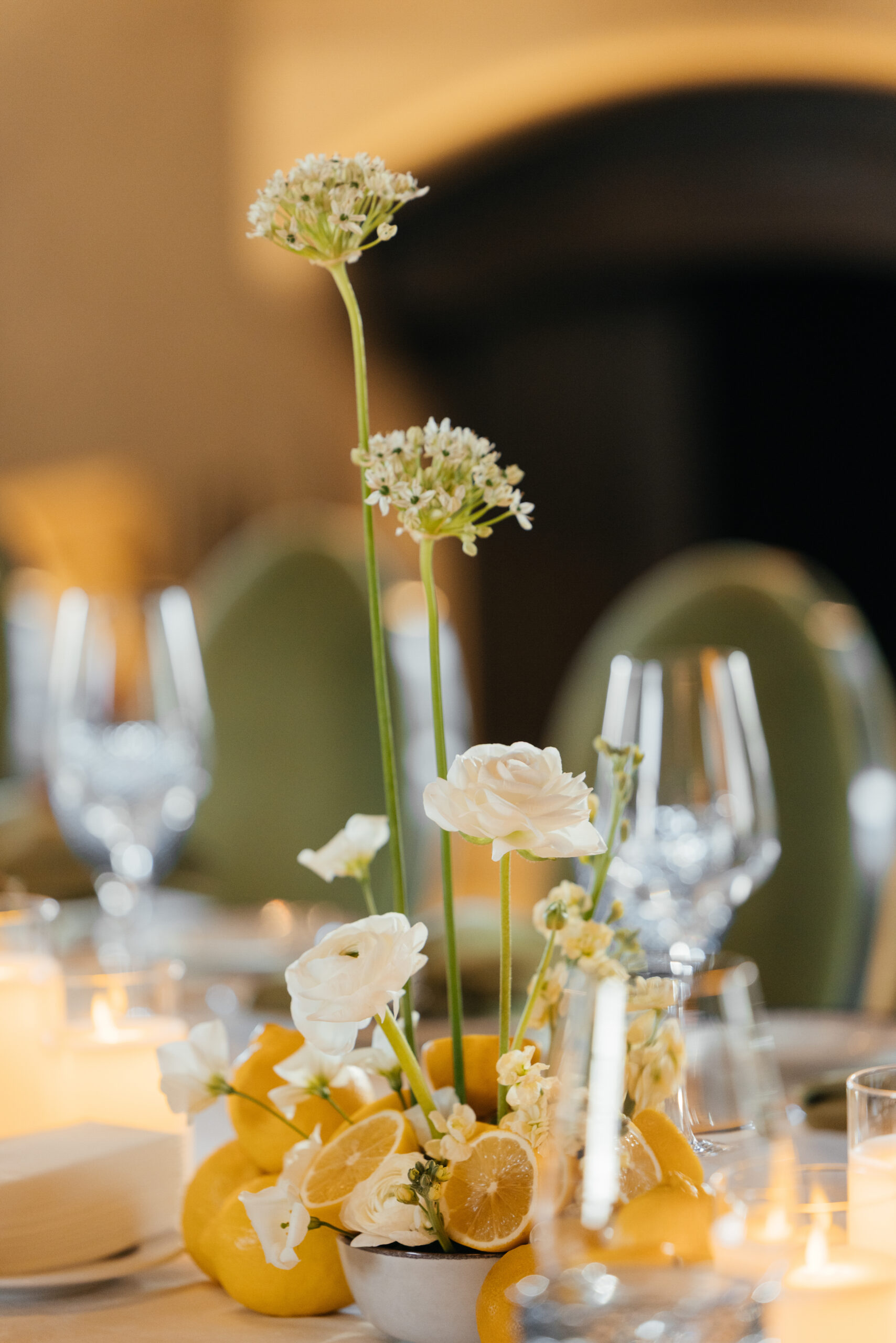
The untouched, whole structural elements that anchored the tablescapes are carefully gathered and brought back to the offsite kitchen prep tents. There, they undergo a theatrical culinary metamorphosis, emerging an hour later as high-energy, late-night food stations. This cyclical approach ensures your midnight menu is already fully funded by your decor budget.
Here is how that transformation comes to life:
- The Citrus Strategy: Purchasing imported floral centerpieces can quickly devour a design budget. Instead, investing in structural arrangements of Meyer lemons, vivid limes, and trailing greenery creates a striking, energetic table runner for a fraction of the cost. When these same fruits are whisked away at 10:00 PM, they are freshly sliced to garnish craft drinks or juiced on the spot for a zesty midnight margarita bar. You completely eliminate the need to purchase a secondary, unseen batch of citrus for the mixologists.
- The Mediterranean Harvest: Anchoring a romantic tablescape with rich, dark eggplants and rustic heirloom tomatoes offers an incredibly lush, opulent aesthetic. Repurposing these very same vegetables is a masterclass in cost efficiency. The culinary team quickly fire-roasts the eggplants into a smoky, complex babaganoush, while the vine-ripened tomatoes are diced into vibrant pico de gallo and rich salsas. Paired with fresh tortillas and artisan wedges, your decor has just funded an interactive, late-night gourmet taco stand and a Mediterranean mezze spread.
- The Artisan Cheese & Root Cascade: Rather than relying solely on flowers for height and texture, visionary designers are using towering wheels of artisanal cheeses, dramatic rainbow carrots, and heirloom radishes to build structural centerpieces. As the evening progresses, these elements are broken down into a magnificent late-night grazing table. The cheese is portioned alongside locally sourced honeycombs, and the root vegetables become a crisp, refreshing crudité, satisfying late-night cravings without adding a single dollar to the main food order.
- The Rustic Bakery Runner: Beautiful, flour-dusted artisan boules and woven breads nested amongst fresh herbs like basil and thyme provide a grounded, welcoming table aesthetic. Later, these same loaves are sliced thick, layered with premium aged cheeses, and pressed into decadent, gourmet grilled cheese sandwiches for guests needing comfort food after hours of dancing.
Truly the possibilities are endless…
Logistical Elegance: The Offsite Advantage
Executing this level of sustainable luxury, particularly in remote or tented outdoor settings, requires a masterful understanding of both spatial environment and classical culinary technique. It relies on an operational flow that seamlessly bridges the gap between the natural landscape and the refined dining table.
Specialized catering teams who excel in offsite events understand that this transition must be entirely invisible to the guest. The magic lies in the precision. Utilizing techniques rooted in classic gastronomy, chefs can take an ingredient that served as visual art at 6:00 PM and elevate it into a comforting, high-end culinary experience by midnight. Furthermore, utilizing precise plated dinner service during the main reception—rather than sprawling, unpredictable buffets—allows event producers to control portions accurately, further eliminating the silent saboteur of over-catering and runaway costs.
To complement this zero-waste, cost-controlled ethos throughout the entire event, couples are also turning to sustainable service wares for these late-night secondary stations. Utilizing chic, compostable dinnerware—like sugarcane bagasse or pressed palm leaf plates—eliminates the need to rent hundreds of extra ceramic plates and the associated late-night cleaning fees. These materials have evolved beautifully, offering a modern organic look that aligns perfectly with luxury outdoor environments while ensuring the budget stays strictly allocated to the guest experience rather than hidden rental logistics.
Savoring the Savings
The zero-waste catering trends of 2027 stand as a bold declaration that smart budgeting and environmental responsibility do not require a sacrifice in elegance. By viewing your menu and your decor as a single, cohesive ecosystem, you take control of the fluctuating costs of the culinary market.
This philosophy empowers couples to serve exceptionally fresh, beautiful food in a way that feels endlessly abundant to the guests, while remaining incredibly strategic for the checkbook. True luxury is never about what you can afford to throw away; it is about extending the life, utility, and beauty of every element you bring to the table.
Get creative while being environmentally responsible! Its a great feeling…Happy Planning!
Your Wedding Expert
xoxo Nindi for TastersHUB Catering & Events
“You give me premature ventricular contractions. You make my heart skip a beat.” —Natalie Portman as Emma No strings Attached 2011