Treating Your Menu as Modern Art
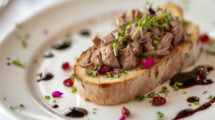
This week, we are stepping away from the traditional, expected norms of wedding catering and moving toward an approach that treats the dining experience with the exact same reverence as a curated museum exhibition. The era of the standard, predictable three-course chicken or beef dinner is firmly in the rearview mirror. Today’s couples are seeking a reception that engages the senses not just through taste but also through striking architectural visual presentation. We are talking about the gallery-plated reception—a concept in which the menu is treated as modern art.
The Canvas: Setting the Scene
When designing a wedding, the mind immediately goes to the floral arrangements, the lighting, the linens, and the venue architecture. However, the food itself is a crucial, often completely underutilized design element. By adopting a modern organic and gallery-inspired aesthetic, the culinary offerings can become a breathtaking extension of the overall decor. This means embracing a minimalist yet highly impactful philosophy, focusing intensely on the beauty of the raw ingredients and the intentionality of the plating.
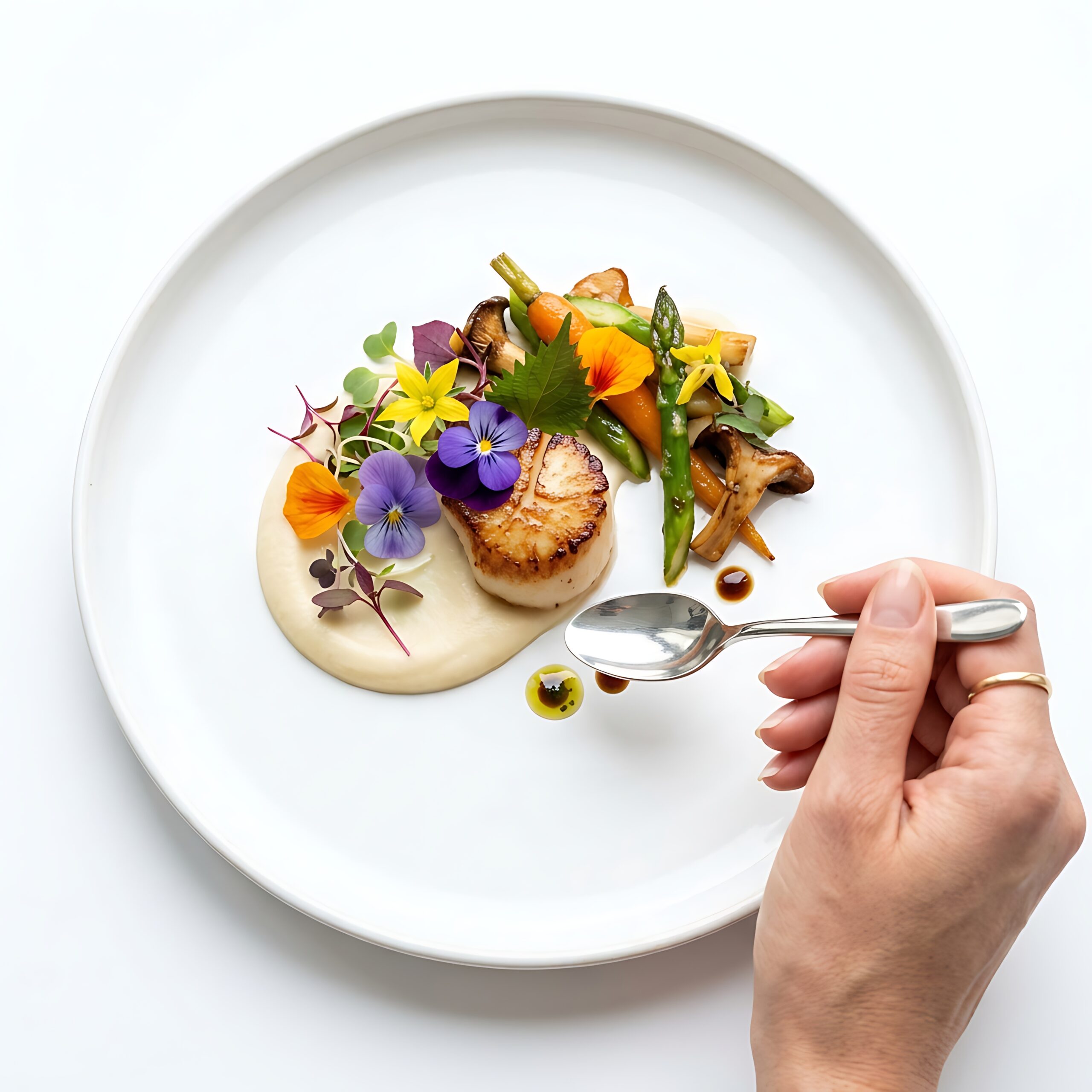
Consider the foundational color palette of your event. To truly achieve a gallery feel, the canvas must be clean, deliberate, and free of unnecessary clutter. Minimalistic whites provide the absolute perfect backdrop, allowing the natural colors of the food to become the focal point of the room. When we introduce grounding elements of deep navy and subtle olive tones, the tablescape instantly takes on a sophisticated, earthy elegance. Picture a stark, matte white ceramic plate acting as your canvas. Against this stark background, a single, perfectly seared scallop rests atop a vibrant sweep of olive-toned herb emulsion. The contrast is sharp, the composition is deeply intentional, and the result is nothing short of artistic. This is not merely feeding your guests; this is offering them an edible installation.
 Architectural Plating: Form Meets Function
The modern organic aesthetic thrives heavily on the tension between the refined and the natural. It is about taking pristine, high-end ingredients and presenting them in a way that feels both luxurious and inherently connected to the earth. Instead of rigid, symmetrical plating, we are seeing a massive shift toward organic, sweeping lines and an asymmetrical balance.
Imagine a vibrant, deep navy linen providing the textural foundation for a tablescape. Upon this, a first course of heirloom tomatoes and imported burrata is not stacked rigidly in the center of the plate, but rather arranged in a sweeping crescent along the rim, adorned with delicate micro-basil and a drizzle of golden olive oil. The negative space on the plate becomes just as important as the food itself—much like the empty space on a gallery wall gives the artwork room to breathe and command attention.
The Roaming Gallery: Interactive Installations
Moving well beyond the seated dinner, the gallery aesthetic translates brilliantly into interactive, roaming food experiences. The stationary buffet is quickly being replaced by dynamic, moving installations that bring the culinary theater directly to the guests. Think of the servers as docents, presenting miniature masterpieces to the room. A custom-built, minimalist wooden tray carrying single-bite portions of duck confit on heirloom blue corn crisps becomes a roaming exhibit. When an attendant finishes the dish tableside with a delicate, aerated foam dispensed from a sleek culinary siphon, the act of serving becomes an absolute performance. The food is alive, the presentation is kinetic, and the guest is actively engaged in the artistic process.
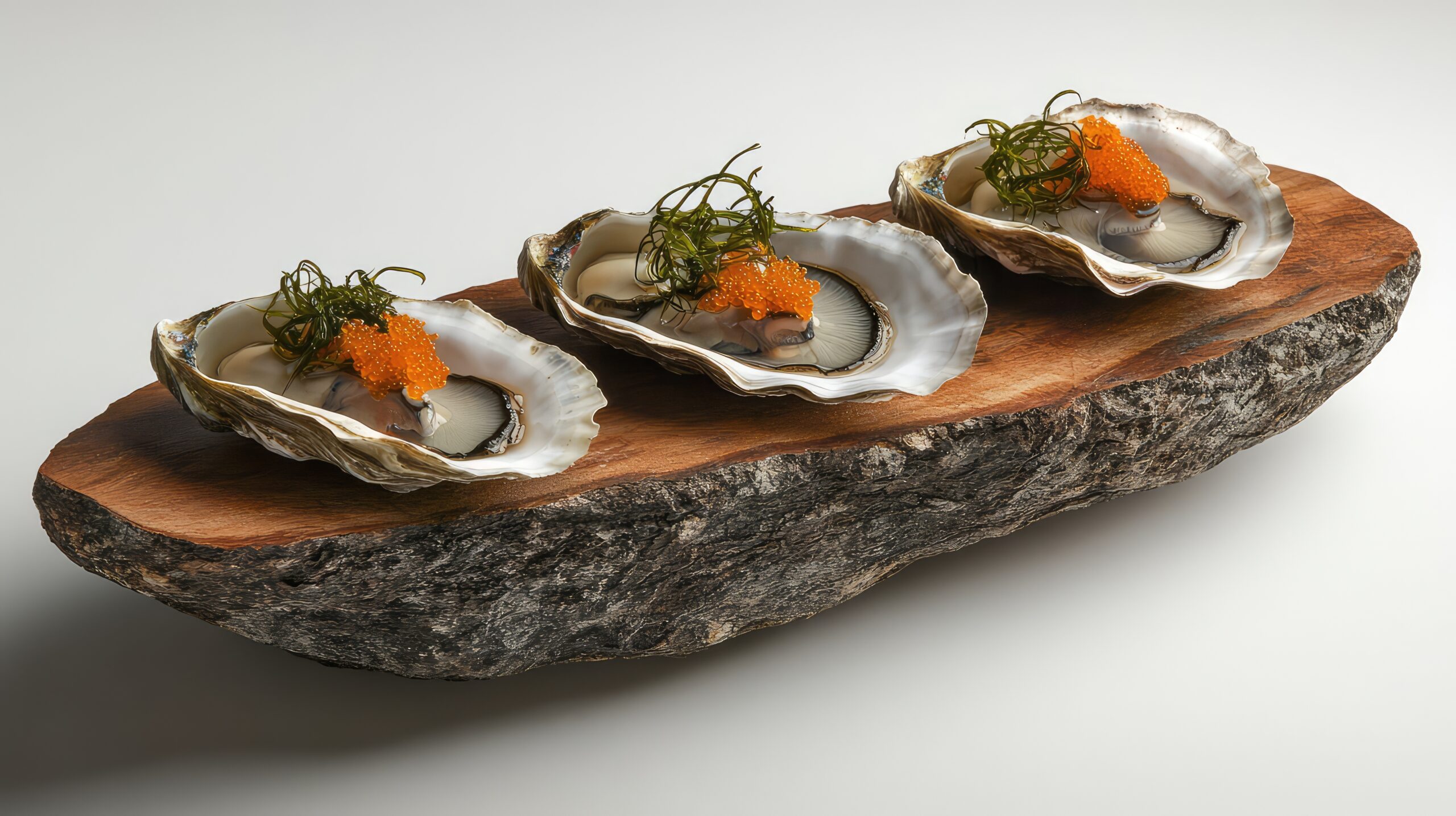
Incorporating living, natural elements directly into the service is another major hallmark of the modern organic gallery reception. We are moving far past the simple, obligatory sprig of parsley. Imagine a roaming raw bar where oysters are not just placed haphazardly on crushed ice, but nestled into a bed of polished river stones and living moss, evoking the rugged beauty of a coastal shoreline. The interplay of textures—the rough stone, the soft green moss, the jagged oyster shell, and the delicate, briny meat within—creates a multi-sensory experience that goes far beyond simple taste.
The Palette of the Palate
To seamlessly execute this level of culinary artistry, collaboration between the couple, the event designer, and the executive chef is completely paramount. The menu must be conceptualized directly alongside the floral design and the rental selections. If the room features heavy, dark woods and rich velvet draping, the menu should offer a striking visual contrast or a complementary richness. If the venue is a bright, light-filled modern space, the culinary aesthetic should lean entirely into that airy, minimalist vibe. The use of custom-designed serveware—matte ceramics, brushed copper, and clear perspex—can further elevate the presentation, ensuring that every vessel is as thoughtfully chosen as the food it holds.
Let us also consider the dessert course, which offers perhaps the most literal interpretation of food as art. The traditional tiered wedding cake, while undeniably beautiful, is making room for deconstructed, interactive dessert installations. An edible terrarium, built entirely within a clear glass sphere using chocolate soil, matcha sponge “moss,” and delicate sugar flowers, becomes a stunning centerpiece that guests can interact with. Alternatively, a savory macaron bar arranged in perfect, color-blocked gradients offers a highly sophisticated, gallery-worthy twist on a classic French technique.
Continuity in Late-Night Bites
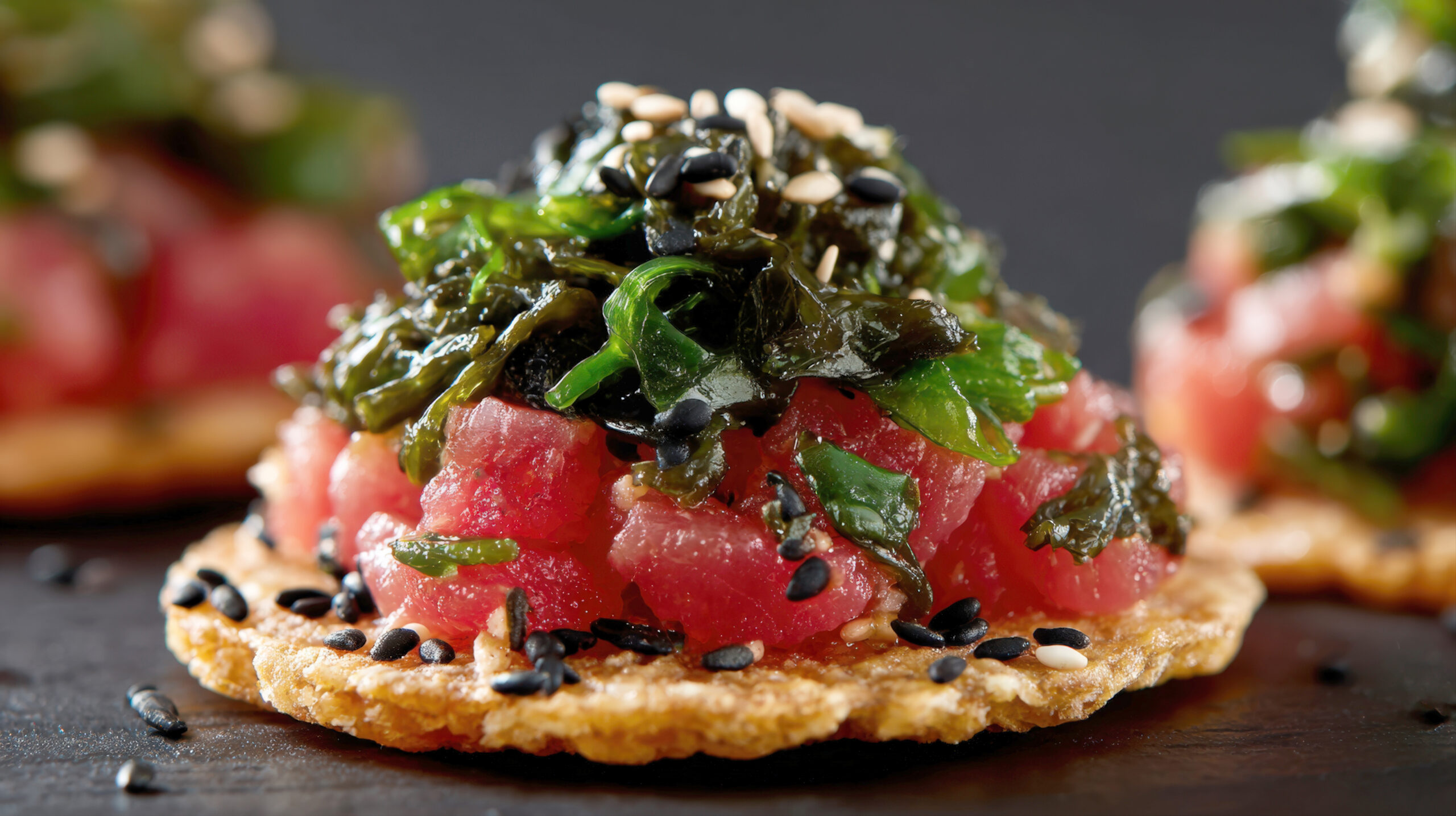
Even the late-night offerings, traditionally a time for casual comfort food, can be subjected to this rigorous artistic standard. A late-night nacho bar need not be a chaotic pile of chips and melted cheese. Instead, envision an architectural display. Suspended artisanal crisp-breads clipped to a sleek copper frame, lightly kissed with a vibrant beetroot crema. Or, miniature, individual slate tiles presenting a single, perfect bite of Ahi tuna tartare on a taro root crisp, accompanied by a precise pipette of jalapeño-lime emulsion. This ensures that the aesthetic continuity of the event remains unbroken from the first cocktail hour pass to the final midnight snack.
Conclusion
Ultimately, the gallery-plated reception is about intentionality. It is about recognizing that your guests will consume the meal with their eyes long before they take their first bite. By applying the principles of modern art—balance, contrast, negative space, and a deliberate color palette of whites, navy, and olive—to your wedding menu, you elevate the entire celebration. You transform a standard necessity into a memorable, breathtaking highlight of the evening. Food becomes a conversation piece, a visual delight, and a stunning testament to the couple’s unique aesthetic vision.
As we continue to explore the rapidly evolving landscape of wedding design in The Wedding Edit, we highly encourage you to challenge your culinary team. Ask them how they can incorporate your aesthetic directly into their plating. Discuss color theory and texture. Demand that your menu be as visually stunning as it is delicious. Because on a day completely dedicated to celebrating love and beauty, every single detail—right down to the garnish on the plate—should be a brilliant work of art.
Happy planning!
Your Wedding Expert
xoxo Nindi for TastersHUB Catering & Events
“You are my heart, my life, my one and only thought.” Sir Arthur Conan Doyle