Let’s address the elephant in the dining room: mention “soup” to a couple planning a mid-July wedding or a high-end summer gala, and you will likely be met with blank stares, if not outright panic. Soup, in the collective culinary imagination, is firmly categorized under *Winter Survival Gear*. It’s what you eat out of an oversized mug when you have a head cold, or what you rely on to warm your bones after scraping ice off a windshield. The thought of serving a steaming bowl of heavy, velvety potato-leek broth in a sun-drenched tent while wearing formalwear is enough to make anyone break into a sympathetic sweat.
But to dismiss an entire culinary category just because the thermometer hits 30°C is a massive missed opportunity.
Enter the chilled soup. When executed with precision, cold soup isn’t just a seasonal compromise; it is a masterclass in culinary elegance, a historical power move, and quite frankly, the most refreshing thing you can offer guests who have been mingling in the summer heat. It’s light, visually striking, and carries a rich, global pedigree that spans centuries.
If you want to elevate your summer menu from predictable to peak epicurean sophistication, it’s time to embrace the chill. Here is how cold soup conquered the globe, and why it deserves a prime spot on your summer table.
A Quick History of Keeping it Cool
Humanity’s relationship with cold soup is ancient, deeply practical, and born out of places that know a thing or two about surviving punishing summer sun. Long before modern refrigeration, civilizations in the Mediterranean and the Middle East understood that hot weather required a radical rethink of the kitchen.
The Romans, ever the pioneers of culinary indulgence, frequently consumed chilled broth seasoned with vinegar, wild herbs, and honey to cool down during scorching Italian summers. Meanwhile, in ancient Andalusia (modern-day southern Spain), field workers mixed stale bread, garlic, olive oil, and water in a mortar and pestle to create a hydrating, sustenance-rich liquid lunch that required zero cooking fire.
By the 19th and 20th centuries, cold soup had risen from rustic field rations to high-society luxury. Classic French chefs took peasant traditions, refined them with heavy cream and pristine straining techniques, and placed them on the menus of the finest hotels in Paris and New York. Suddenly, eating soup with an ice chill wasn’t just practical—it was the epitome of high-class summer dining.
Around the World in Chilled Bowls
To truly understand the versatility of cold soup, you have to look at how different cultures have uniquely mastered the art of the refreshing first course. There is a global variation for every palate, ranging from ultra-savoury umami bombs to vibrant, botanical elixirs:
- Spain: Gazpacho, Salmorejo & Ajo Blanco
The undisputed royalty of the cold soup world hail from Spain, where they have perfected three entirely distinct styles. Classic **Gazpacho** is a vibrant, ruby-red celebration of the peak summer harvest: ripe tomatoes, crisp cucumbers, bell peppers, garlic, and vinegar, emulsified with high-quality extra-virgin olive oil. It tastes exactly like a summer garden in liquid form.
Its richer, silkier cousin, **Salmorejo**, hails from Córdoba and leans heavily into tomatoes, bread, and garlic, resulting in a luxurious texture that is traditionally garnished with hard-boiled egg and crispy shards of jamón Serrano.
Then there is **Ajo Blanco**, the “White Gazpacho,” which actually predates the arrival of tomatoes in Europe. Made from a blend of crushed almonds, garlic, bread, olive oil, and vinegar, it yields a striking, milk-white soup that is incredibly rich and savoury. Traditionally served ice-cold and garnished with sweet green grapes or slices of fresh melon, it offers a perfect, sophisticated balance of sweet and savoury
- India: The Elevated “Tadka” Raita
If you flip through traditional Indian cookbooks looking for a section explicitly labelled “Cold Soups,” you will come up empty-handed. In the subcontinent, liquid starters like *Shorba* or *Rasam* are served piping hot, because fighting fire with fire is a time-honoured culinary philosophy.
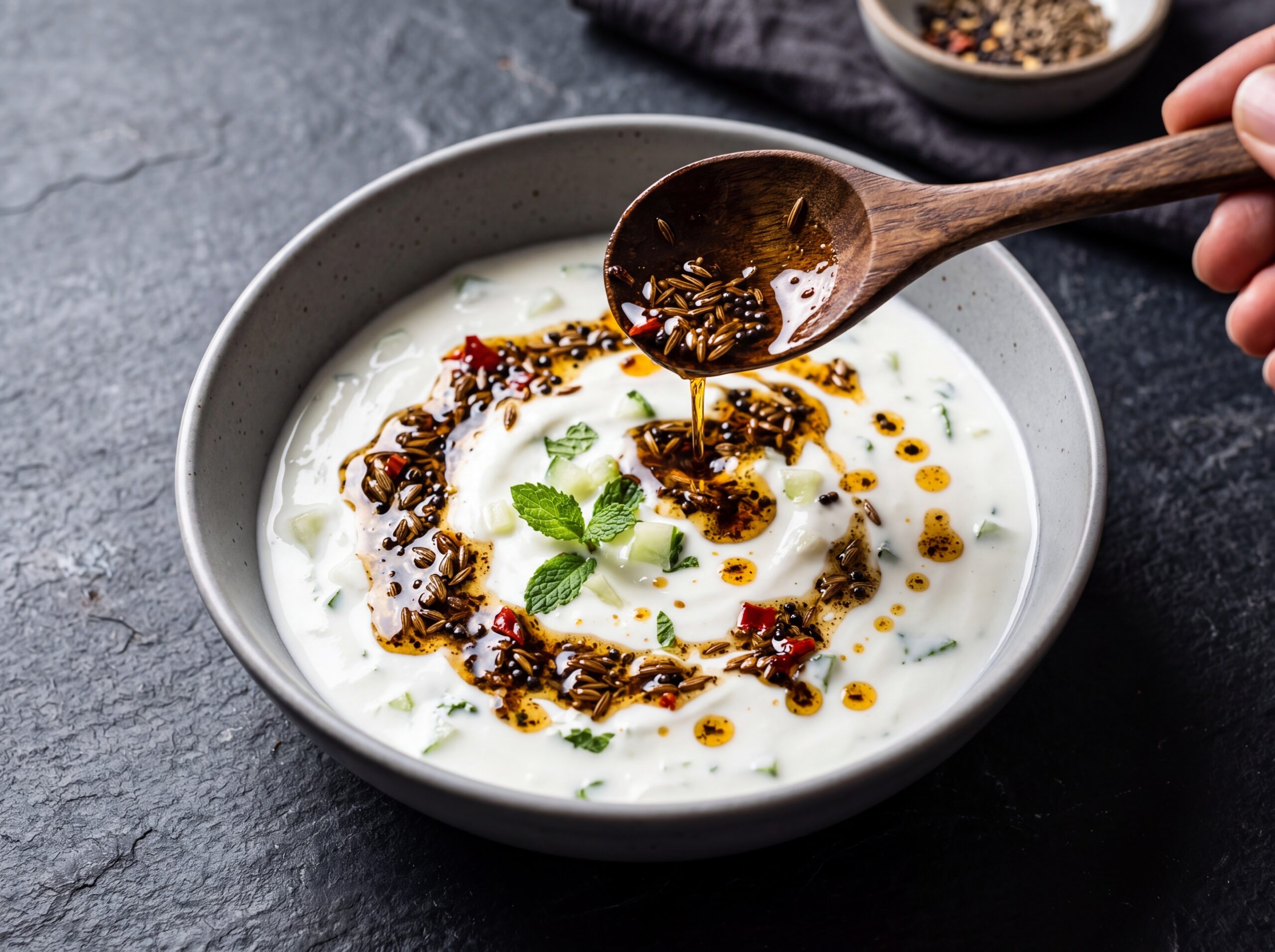
But if we look at the actual physics of Indian summer dining, the region has been serving a de facto cold soup for centuries: **Raita**. Traditionally treated as a cooling side dish to balance out spiced main courses, a high-end kitchen can easily thin out premium, ice-cold curd (yogurt) with crisp, grated cucumber and fresh mint to elevate it into a stunning first-course bowl.
What takes this from a humble condiment to a Michelin-level starter is the **tadka**—the theatrical technique of tempering spices in hot oil. Just before it hits the table, a warm infusion of spluttered mustard seeds, earthy cumin, and blistered curry leaves is swirled directly into the
ice-cold yogurt. The contrast of the warm, aromatic oils hitting the chilled, creamy base is pure sensory genius. It’s rich, it’s punchy, and it proves that sometimes the best cold soup isn’t actually called soup at all.
- Japan: Hiyajiru
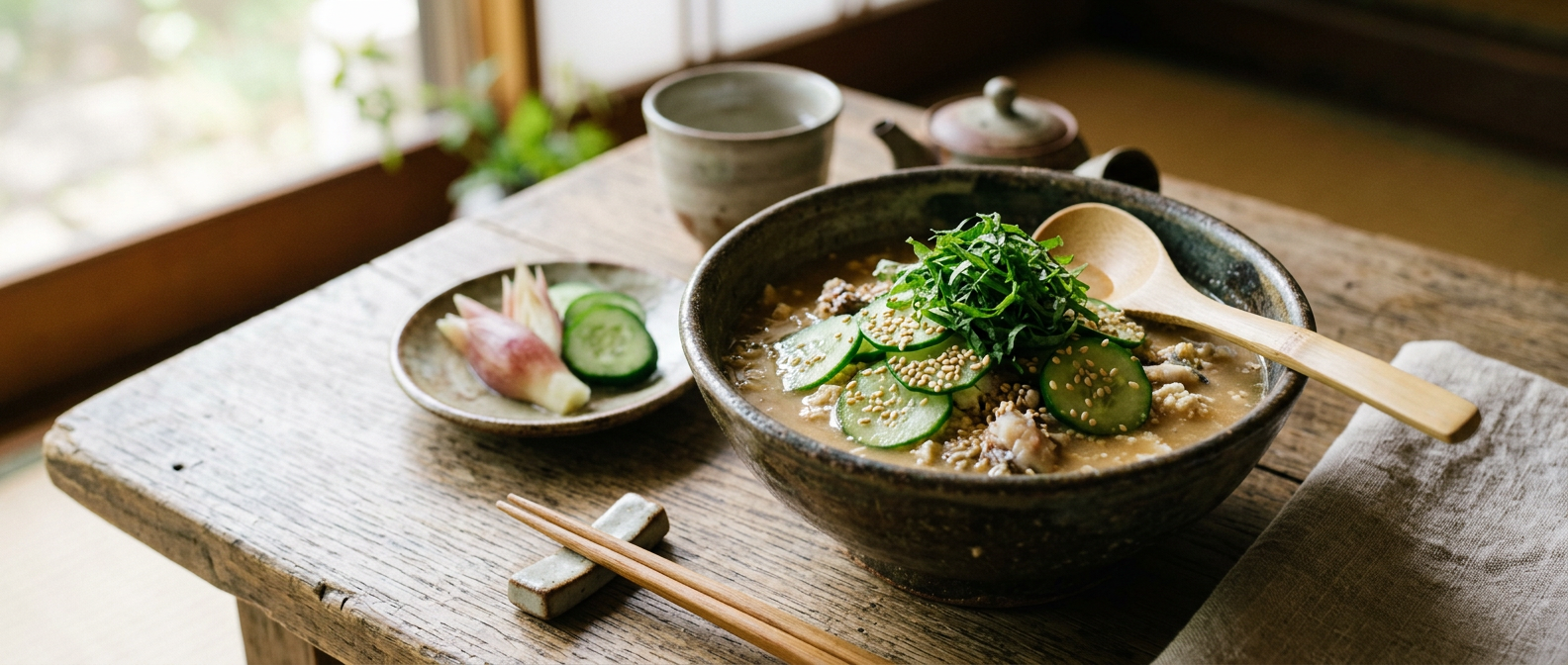
While many people think of *Zaru Soba* (chilled buckwheat noodles with dipping sauce) as Japan’s ultimate summer comfort, the prefecture of Miyazaki created **Hiyajiru**—a deeply savoury, ice-cold dashi and miso soup designed specifically to beat punishing summer humidity.
It starts with an incredibly fragrant base of toasted white sesame seeds, grilled white fish (like mackerel), and miso, which are ground together into a paste and dissolved into an ice-cold, smoky *dashi* broth. Packed with razor-thin slices of crisp cucumber, torn fresh shiso leaves, and slivered ginger, it is a masterclass in umami. Served as an elegant amuse-bouche, it wakes up the palate with an effortless balance of salt, smoke, and herbal freshness.
- Russia: Okroshka
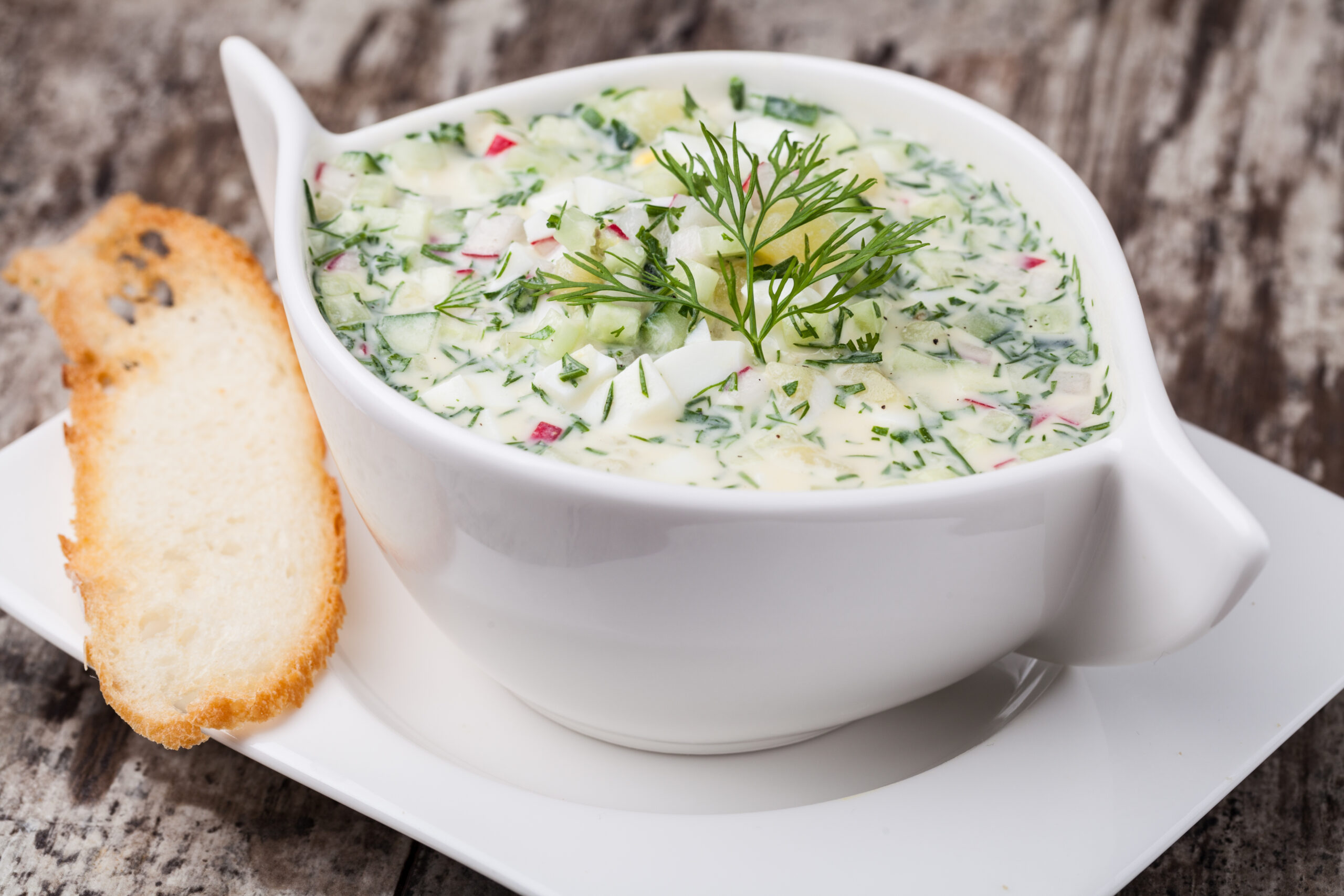
If Spain has Gazpacho, Russia has **Okroshka**—the absolute king of Eastern European summer dining. It is sharp, crunchy, herb-heavy, and features a liquid base that routinely blows Western minds: a naturally carbonated, fermented rye bread beverage called **Kvass** (or alternatively, a tangy, ice-cold kefir/buttermilk base).
The construction of the soup is essentially a finely diced, premium salad consisting of crisp radishes, English cucumbers, boiled potatoes, hard-boiled eggs, and cooked ham or smoked beef, completely buried under an avalanche of fresh dill and green onions. Ice-cold, slightly sour, and bubbly Kvass is poured directly over the top just before serving, finished with a sharp dollop of Russian mustard and rich sour cream. The natural fizz and the sharp bite of the herbs make it an instant, addictive heat-killer.
- China: Botanical Tonics & Sweet Consommés
China approaches the cold soup concept through the lens of ancient medicinal yin-yang balance. While drinking ice-cold liquids is traditionally discouraged in Chinese food philosophy, extreme summer humidity demands a cooling exception.
The first approach is **Lvdou Tang** (Chilled Mung Bean and Lily Bulb Soup), a southern favorite where whole mung beans are simmered gently with dried lily bulbs and lotus seeds until they form a light, earthy, and naturally sweet broth. Upscale kitchens infuse this broth with fresh jasmine or osmanthus blossoms, serving it in delicate crystal bowls as a clean, semi-sweet palate cleanser.
For a more savory-sweet punch, modern chefs look to imperial history with **Suanmeitang** (Sour Plum Broth). Made by simmering smoked Chinese plums (*wumei*), hawthorn, licorice root, and rock candy, it yields a deep amber liquid that is intensely tart, smoky, and complex. Clarified into a pristine chilled consommé, it serves as a spectacular, avant-garde amuse-bouche.
- France: Vichyssoise
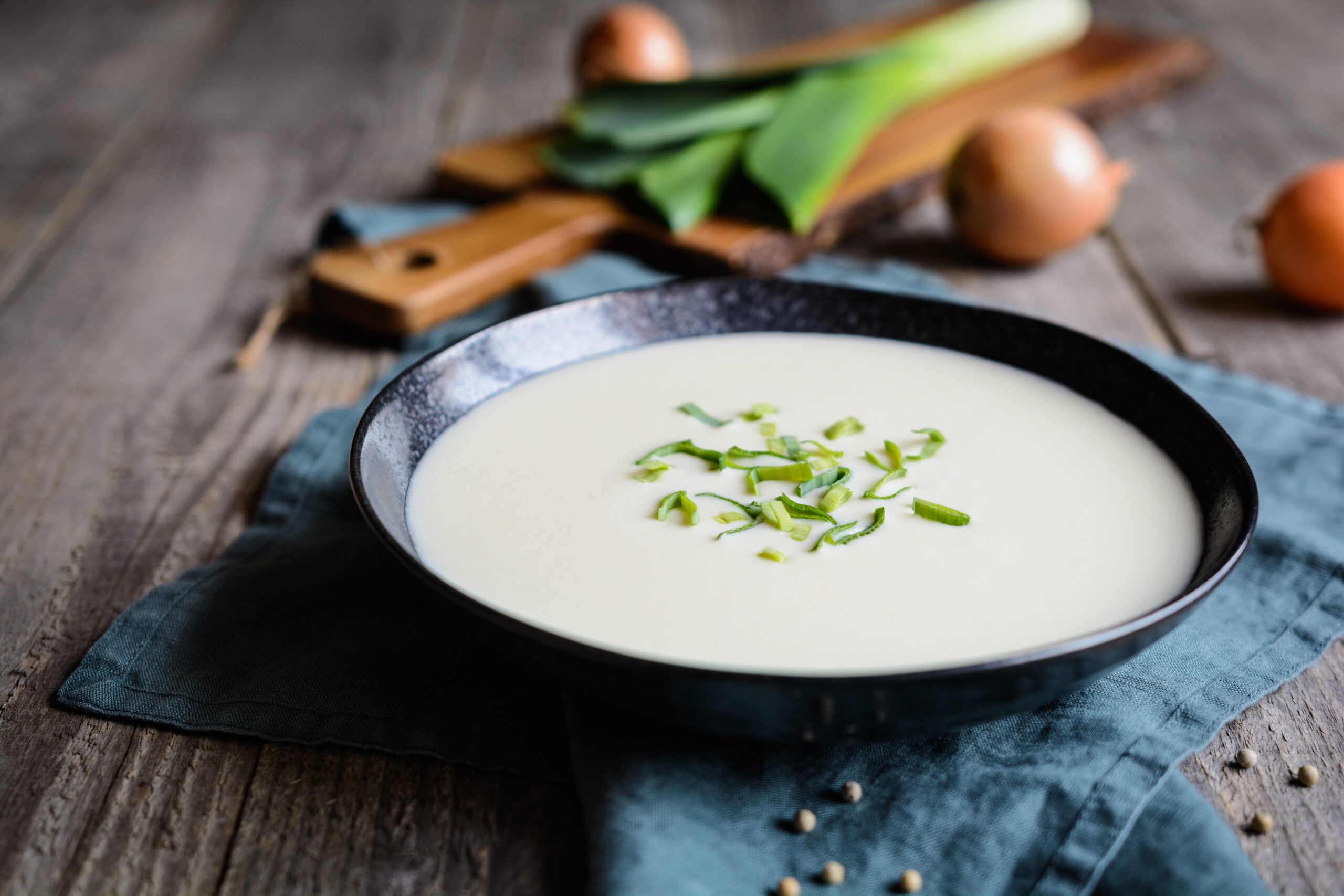
The ultimate testament to French culinary refinement, **Vichyssoise** is a thick, velvety blend of puréed leeks, onions, potatoes, cream, and chicken stock, served completely chilled. While its origins are fiercely debated (most credit Chef Louis Diat at the Ritz-Carlton in New York in 1917, who, nostalgic for his mother’s potato-and-leek soup, cooled it down with cold milk), its status as a timeless luxury classic is undeniable. It is rich, smooth, and incredibly comforting, without ever feeling heavy on a warm night.
- Eastern Europe: Chłodnik & Tarator
In Poland and Lithuania, summer is heralded by the arrival of **Chłodnik** (or Cold Beet Soup). This visually spectacular dish features a shocking, bright pink hue courtesy of young beets blended with kefir, crisp cucumbers, radishes, and fresh dill. Across the way in Bulgaria, **Tarator** offers a simpler alternative using a base of tangy yogurt, grated cucumbers, walnuts, garlic, and dill—essentially the most refreshing liquid tzatziki you could ever dream of.
## Introducing the Chilled Course: Why it Works for Modern Celebrations
Now that the historical and global precedents have been set, let’s talk strategy. Why should a modern summer host choose a chilled soup over a standard mixed green salad?
The Ultimate Palate Cleanser
After an hour of sipping champagne and mingling in the sun during cocktail hour, sitting down to a cold, crisp, and slightly acidic first course instantly revives the palate. It wakes up the taste buds and prepares guests for the main entree without filling them up prematurely.
A Visual Showstopper
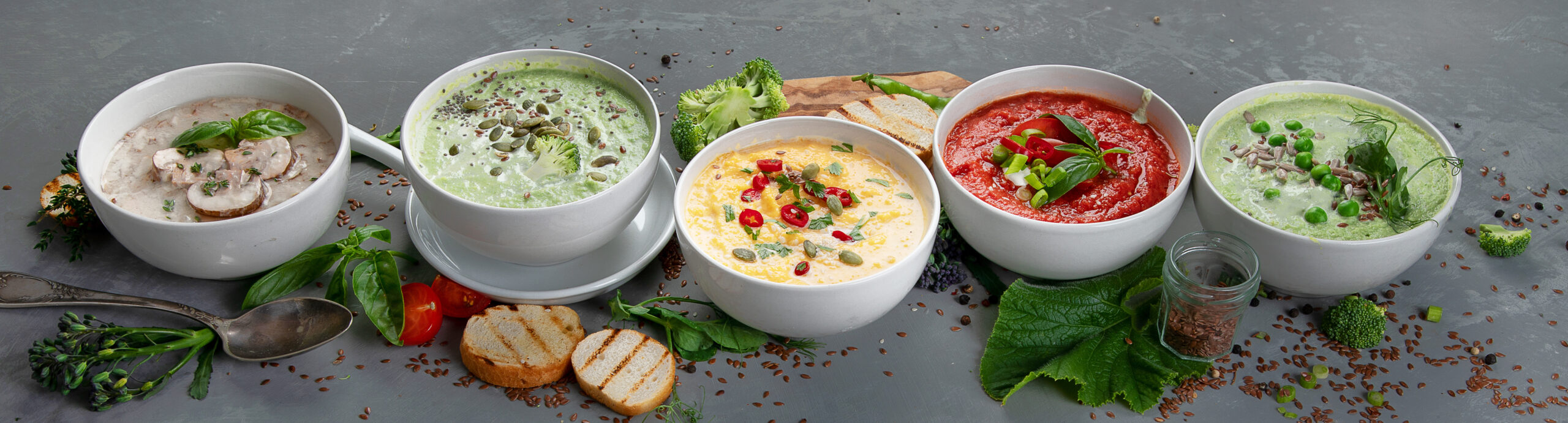
Cold soups are a food stylist’s dream. Because they are served cold or at room temperature, they won’t wilt or lose their vibrant color under warm venue lighting. A bright pink Chłodnik, a vivid green chilled pea-and-mint soup, or a golden yellow heirloom tomato gazpacho acts as a striking, edible pop of color on a beautifully dressed table.
The Theater of the Pour
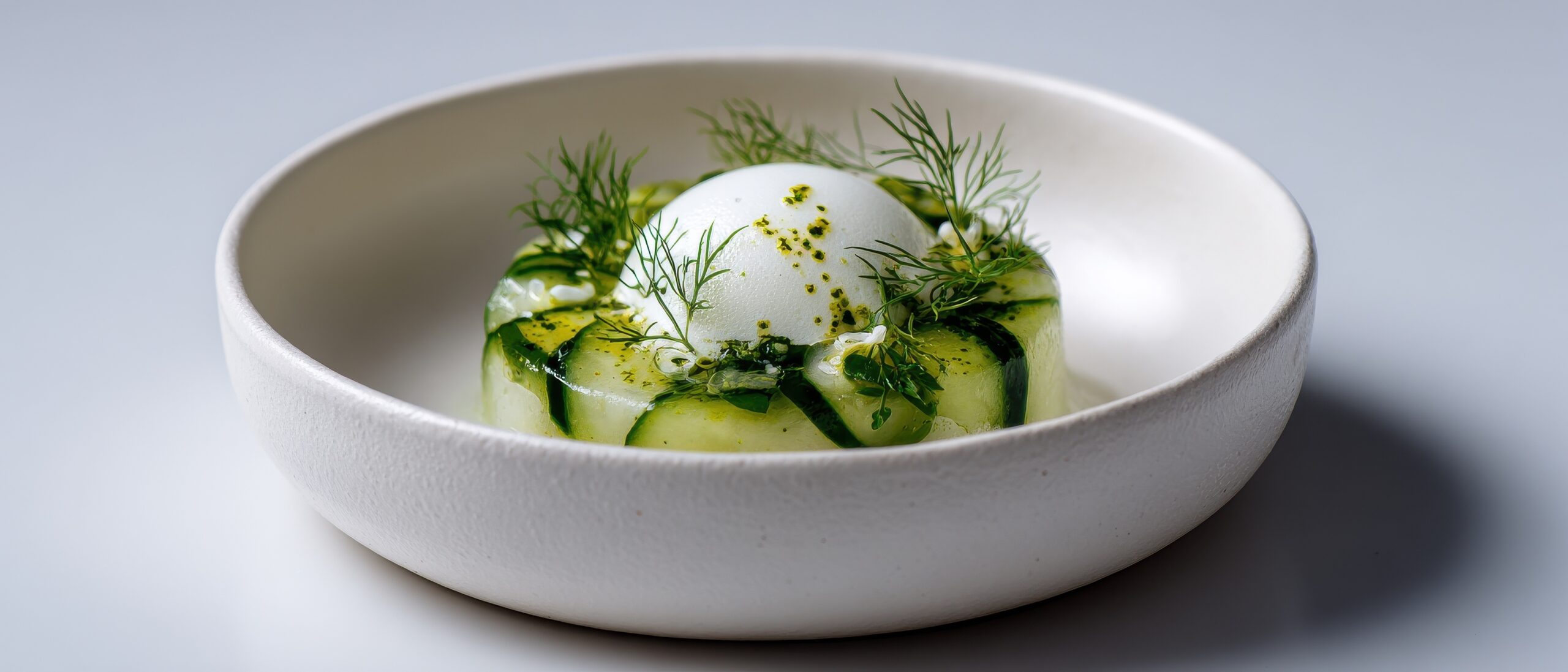
If you want to inject a little interactive luxury into the dining room, cold soup is the perfect vehicle for tableside service. Guests are presented with a shallow bowl featuring an artfully arranged cluster of garnishes—perhaps a single poached prawn, a swirl of micro-herbs, finger lime caviar, or edible flowers. Waitstaff then move seamlessly around the table, pouring the chilled soup from elegant ceramic pitchers directly into the bowl. It’s an instant conversation starter and a true sensory experience.
The Editorial Takeaway
“Serving hot food in the dead of summer is a culinary misstep; avoiding soup entirely is a design failure. By embracing the global heritage of the chilled bowl, you give your guests a first course that is unexpected, deeply historic, and effortlessly cool.”
Every course has a function and while some can be omitted, there are definitely ways to include them all.
Happy planning!
Your Wedding Expert
xoxo Nindi for TastersHUB Catering & Events
“Thinking of you keeps me awake. Dreaming of you keeps me asleep. Being with you keeps me alive” Unknown